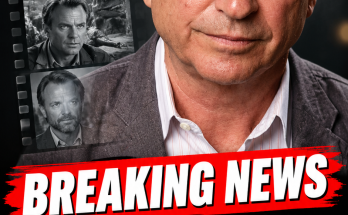
The entertainment world recently mourned the loss of a beloved television staple, an actor whose face and voice became synonymous with 1990s pop culture and the formative years of millions of teenagers. Dennis Haskins, universally adored as the earnest, authoritative, yet deeply caring Principal Richard Belding on the hit sitcom “Saved by the Bell,” left behind a legacy of warmth, professionalism, and quiet dignity. Below is a comprehensive, detailed biography of Dennis Haskins, exploring the circumstances of his passing, his remarkable career achievements, and the fascinating “secret histories” that defined the man behind the principal’s desk. The Passing of an Icon: Why and How He Died
Dennis Haskins passed away on the night of Sunday, September 27, 2026. He was 75 years old. His death occurred in an assisted living facility in Burbank, California, a city where he had spent much of his adult life and career.
While the immediate, specific medical trigger of his passing was not broadcast to the public, the underlying reason for his declining health and ultimate death was revealed to be a secret, years-long battle with Parkinson’s disease. According to his close friend and longtime caretaker, Kimberly Snow, Haskins had been quietly fighting the progressive neurological disorder since 2018, alongside other undisclosed health concerns. The reason his death came as a shock to the public and his fans was due to Haskins’ deliberate choice to keep his diagnosis entirely private. He actively avoided the spotlight regarding his health because he did not want pity, nor did he want his legacy to be overshadowed by his illness. When faced with the reality of his diagnosis, he reportedly struggled with how to address it publicly, asking his caretaker, “What do I even say?” Respecting his wishes, Snow and his inner circle maintained a wall of privacy around his condition, helping him navigate his transition into assisted living and his final years in absolute quiet. Ultimately, his body succumbed to the compounding effects of Parkinson’s and age-related health decline.
A Specific Biography: From Chattanooga to Hollywood
Early Life and Roots
Dennis Button Haskins IV was born on November 18, 1950, in Chattanooga, Tennessee. He was born into a close-knit family, the son of Dennis Button Haskins IV and Veneta Marilyn Yarbrough. Raised alongside two brothers, Haskins was deeply rooted in his Southern upbringing and his local community. He attended Our Lady of Perpetual Help before enrolling in Notre Dame High School in Chattanooga, where he graduated with the class of 1968. His ties to his hometown remained strong throughout his life, and he was frequently celebrated as a distinguished local alumnus who made it big in Hollywood. College Years: Athletics and Fraternity Life
After high school, Haskins pursued higher education with a competitive spirit. He initially harbored dreams of playing college basketball at the prestigious University of Tennessee. However, after failing to make the cut for the main campus team, he pivoted and enrolled at the University of Tennessee at Chattanooga (UTC). There, he successfully walked onto the basketball team.
Interestingly, his college experience was not limited to the hardwood. Haskins was a multifaceted student who also joined the UTC cheerleading squad, showcasing an early flair for performance, crowd engagement, and school spirit—traits that would later serve him perfectly as a television high school principal. Furthermore, he was an active member of the Kappa Sigma fraternity, embedding himself in the social and brotherhood aspects of college life.
The Pre-Hollywood Hustle
Before he ever stepped onto a television soundstage, Haskins was a major player in the music industry. He did not start out as a struggling actor waiting tables; instead, he worked as a music manager, a talent agent, and a concert promoter. In this high-stakes, fast-paced environment, he represented and managed massive, legendary rock-and-roll talents, including the iconic Welsh singer Tom Jones and Southern rock legend Gregg Allman. This era of his life required immense business acumen, negotiation skills, and the ability to handle larger-than-life, often volatile personalities.
Additionally, before securing steady acting work, Haskins was a familiar face on 1980s daytime television, but not as a scripted character. He was a contestant on popular game shows, trying his luck and charisma on “Press Your Luck” and “Scrabble.”
Breaking into Acting
In the early 1980s, Haskins transitioned from the music business to acting, relocating to Los Angeles. His first on-screen credit came in 1981 with a minor role as a workman on the classic sitcom “Archie Bunker’s Place.” Throughout the 1980s, he paid his dues as a working character actor, landing guest-starring roles in some of the most popular shows of the decade, including “Magnum, P.I.,” “The Twilight Zone,” and “The Dukes of Hazzard.” He was a reliable, recognizable face in Hollywood, slowly building a resume that would soon lead to his big break.
Achievements and the Legacy of His Work
The Creation of a Cultural Touchstone
Haskins’ crowning achievement occurred in 1988 when he was cast as Principal Richard Belding in the Disney Channel series “Good Morning, Miss Bliss.” When the show was retooled, rebranded, and moved to NBC’s Saturday morning lineup in 1989 as “Saved by the Bell,” Haskins was the only adult regular cast member retained.
This decision by the producers proved to be a masterstroke. Haskins became the anchor of the show. In a television landscape filled with cynical or absent authority figures, Haskins’ Mr. Belding was a revelation. He was strict but fair, easily flustered but ultimately deeply caring toward his students—Zack Morris, Kelly Kapowski, A.C. Slater, Jessie Spano, Lisa Turtle, and Screech Powers. His booming voice, expressive face, and iconic catchphrase, “Hey, hey, hey, what is going on here?”, became permanently etched into the cultural lexicon of the 1990s.
Unprecedented Longevity
One of Haskins’ most remarkable professional achievements was his sheer longevity in a single role. It is incredibly rare in television for an actor to play the exact same character continuously across multiple distinct series and spin-offs. Haskins portrayed Principal Belding across seven different television iterations, including “Saved by the Bell,” “Saved by the Bell: The College Years,” and “Saved by the Bell: The New Class,” which ran until 2000. Over his career, he amassed more than 100 industry credits and appeared in nearly 250 episodes as the beloved Bayside High principal.
Embracing Modern Media and Nostalgia
Haskins never turned his back on the role that made him famous; instead, he embraced it with grace and humor. In 2015, he joyfully reprised the role of Mr. Belding for a highly praised, nostalgic sketch on “The Tonight Show Starring Jimmy Fallon,” reuniting with his original castmates and introducing the character to a new generation. He also embraced internet culture and professional wrestling, making multiple appearances in WWE superstar Zack Ryder’s pioneering YouTube series, “Z! True Long Island Story,” and even making a cameo at a live WWE Raw event.
The Secret Histories of Dennis Haskins
While Hollywood is notorious for its scandals, Dennis Haskins lived a remarkably clean, scandal-free life. However, beneath his wholesome television persona lay several “secret histories” and fascinating hidden chapters that his fans rarely knew about.
Secret History 1: The Silent War with Parkinson’s Disease
The most profound and heartbreaking secret of Haskins’ life was his battle with Parkinson’s disease. Diagnosed around 2018, Haskins watched his physical autonomy slowly decline while continuing to interact with fans and the public. He chose to hide this degenerative illness because he fiercely protected his own dignity and the joyful image his fans held of him. He did not want to be viewed through the lens of a tragic illness, nor did he want to field endless questions about his prognosis. His caretaker, Kimberly Snow, acted as his gatekeeper and confidante, honoring his request for silence. This secret history reveals a man of immense stoicism and pride, who preferred to suffer in private rather than burden his fans with his pain.
Secret History 2: The Rock-and-Roll Power Player
Fans who knew him only as the bumbling, sweater-wearing Principal Belding would be shocked to learn of his past as a hard-nosed music industry executive. Managing artists like Gregg Allman—a figure synonymous with the wild, drug-fueled, chaotic rock-and-roll lifestyle of the 1970s—required a tough, street-smart edge that Haskins kept entirely hidden behind his television smile. This secret history shows that Haskins was not just a naive character actor, but a seasoned businessman who had navigated the darkest and most chaotic corridors of the entertainment industry long before he ever stepped foot in the bright, sanitized halls of Bayside High.
Secret History 3: The “Phantom Owner” of Dimples Karaoke
Haskins had a massive, unpublicized passion for karaoke and community building. For years, he was a constant fixture at Dimples, a beloved and legendary karaoke bar in Burbank, California. He loved the environment so much that he spent countless hours there singing, socializing, and taking selfies with everyday patrons. He was such a staple of the establishment, and so generous with his time, that a local urban legend was born: many patrons and locals genuinely believed that Dennis Haskins was the actual owner of the bar. Even though Dimples eventually closed its doors, the secret history of Haskins as the “unofficial mayor” of a gritty, beloved local dive bar highlights his deep desire for authentic, unpretentious human connection.
Secret History 4: The Karaoke Recording Artist
Leaning into his love for singing and his “secret” life at the karaoke bar, Haskins actually stepped into a recording studio in the summer of 2009. In a quirky and highly specific achievement, he released his own music album titled “Karaoke With Your Favorite Principal Dennis.” Recorded in South Pittsburg, Tennessee, the album featured Haskins belting out classics like Billy Joel’s “Piano Man.” The most surprising secret of this album was a duet he recorded of the R&B classic “Mustang Sally” with Brooke Hogan, the daughter of wrestling icon Hulk Hogan. This bizarre but endearing musical endeavor remains a hidden gem in his discography, known only to the most dedicated of fans.
Secret History 5: The College Cheerleader and Frat Brother
When people picture a high school principal, they rarely picture a college cheerleader. Yet, this was a secret reality of Haskins’ youth. His time on the UTC cheerleading squad and his membership in the Kappa Sigma fraternity gave him an intimate, firsthand understanding of school spirit, pep rallies, and the social dynamics of student life. This hidden history likely informed his incredibly authentic portrayal of Mr. Belding. When Haskins yelled at students to get to class or tried to organize a school pep rally on television, he was drawing upon his own genuine, lived experiences as a highly involved, spirited college student.Dennis Haskins was far more than the punchlines and catchphrases of a 1990s Saturday morning cartoon. He was a multifaceted man: a Southern college athlete, a tough music promoter, a game show contestant, a passionate karaoke singer, and a fiercely private warrior who fought a neurological disease in silence so that his fans could continue to smile when they saw his face.
His death at the age of 75 marks the end of an era for television comedy, but his specific biography and secret histories reveal a man who lived a remarkably full, varied, and deeply principled life. He achieved the rarest of Hollywood feats: he became a global star without ever losing his soul, his kindness, or his connection to the everyday people who loved him.
The Passing of an Icon: Circumstances and Age
Dennis Haskins passed away on Sunday, September 27, 2026, at the age of 75. His death occurred in an assisted living facility in Burbank, California, a city that had served as his home base for the majority of his adult life and career.
While the immediate medical cause of death was not publicly disclosed, it was later revealed by his longtime friend and caretaker, Kimberly Snow, that Haskins had been silently battling Parkinson’s disease since 2018, alongside other age-related health complications. The reason his decline went largely unnoticed by the public was entirely by his own design. Haskins was fiercely protective of his dignity and the joyful image his fans held of him. He deliberately avoided discussing his diagnosis because he did not want pity, nor did he want his legacy to be overshadowed by illness. When confronted with how to address his condition, he reportedly asked his caretaker, “What do I even say?” Honoring his wishes, his inner circle maintained a strict wall of privacy, allowing him to navigate his final years with the same quiet grace he exhibited throughout his life.
A Highly Specific Biography: From Southern Roots to Hollywood
Early Life and Education
Dennis Button Haskins IV was born on November 18, 1950, in Chattanooga, Tennessee, to Dennis Button Haskins IV and Veneta Marilyn Yarbrough. Raised alongside two brothers, he was deeply rooted in his Southern upbringing. He attended Our Lady of Perpetual Help before graduating from Notre Dame High School in Chattanooga in 1968, a school that would later proudly claim him as a distinguished alumnus.
His college years at the University of Tennessee at Chattanooga (UTC) were defined by a competitive spirit and a desire to be involved. Initially, he harbored dreams of playing college basketball at the main University of Tennessee campus. After failing to make the cut for that team, he pivoted to UTC, where he successfully walked onto the basketball squad. However, his collegiate identity was not limited to athletics. In a fascinating contrast to his later role as a stern high school principal, Haskins was also a member of the UTC cheerleading squad, showcasing an early flair for performance, crowd engagement, and school spirit. He was also an active, dedicated member of the Kappa Sigma fraternity, embedding himself in the social fabric of campus life.
The Pre-Hollywood Hustle: Music Industry Power Player
Before he ever stepped onto a television soundstage, Haskins was a major, behind-the-scenes player in the music industry. He did not start out as a struggling actor waiting tables; instead, he built a robust career as a music manager, talent agent, and concert promoter. In this high-stakes, fast-paced environment, he represented and managed massive, legendary rock-and-roll talents, most notably the iconic Welsh singer Tom Jones and Southern rock legend Gregg Allman. Managing artists of this caliber—especially Allman, who was synonymous with the chaotic, hard-living rock lifestyle of the 1970s—required a tough, street-smart edge, immense business acumen, and the ability to handle larger-than-life, often volatile personalities. This era of his life gave him a grounded, realistic perspective on the entertainment industry that few character actors ever possessed.
Breaking into Acting
In the early 1980s, Haskins transitioned from the music business to acting, relocating to Los Angeles. His first on-screen credit came in 1981 with a minor role as a workman on the classic Norman Lear sitcom *Archie Bunker’s Place*. Throughout the 1980s, he paid his dues as a working character actor, landing guest-starring roles in some of the most popular shows of the decade, including *Magnum, P.I.*, *The Twilight Zone*, and *The Dukes of Hazzard*.
Interestingly, before securing steady scripted work, Haskins was a familiar face on 1980s daytime television as a contestant. He appeared on classic game shows like *Press Your Luck* and *Scrabble*, demonstrating a scrappy, charismatic determination to stay visible in the entertainment world, even if it was not initially in front of a script.
Achievements and the Legacy of His Work
The Creation of a Cultural Touchstone
Haskins’ crowning achievement occurred in 1988 when he was cast as Principal Richard Belding in the Disney Channel series *Good Morning, Miss Bliss*. When the show was retooled, rebranded, and moved to NBC’s Saturday morning lineup in 1989 as *Saved by the Bell*, Haskins was the only adult regular cast member retained.
This decision by the producers proved to be a masterstroke. Haskins became the moral and comedic anchor of the show. In a television landscape often filled with cynical, absent, or overly harsh authority figures, Haskins’ Mr. Belding was a revelation. He was strict but fair, easily flustered by the schemes of Zack Morris, but ultimately deeply caring toward his students. His booming voice, expressive face, and iconic catchphrase, “Hey, hey, hey, what is going on here?”, became permanently etched into the cultural lexicon of the 1990s.
Unprecedented Longevity and Franchise Dedication
One of Haskins’ most remarkable professional achievements was his sheer longevity in a single role. It is incredibly rare in television for an actor to play the exact same character continuously across multiple distinct series and spin-offs. Haskins portrayed Principal Belding across seven different television iterations, including *Saved by the Bell* (1989–1993), the TV movies *Saved by the Bell: Hawaiian Style* and *Saved by the Bell: Wedding in Las Vegas*, *Saved by the Bell: The College Years*, and *Saved by the Bell: The New Class* (1993–2000). Over his career, he amassed more than 100 industry credits and appeared in nearly 250 episodes as the beloved Bayside High principal.
Embracing Modern Media and Nostalgia
Unlike some actors who resent being typecast, Haskins embraced his iconic role with grace, humor, and genuine appreciation. As recently as 2015, he joyfully reprised the role of Mr. Belding for a highly praised, nostalgic sketch on *The Tonight Show Starring Jimmy Fallon*, reuniting with his original castmates and introducing the character to a new generation. He also embraced internet culture and professional wrestling, making multiple appearances in WWE superstar Zack Ryder’s pioneering YouTube series, *Z! True Long Island Story*, and even making a cameo at a live WWE *Raw* event. He also lent his voice to animated parodies of the show, such as *Robot Chicken*.
The Secret Histories of Dennis Haskins
While Hollywood is notorious for its scandals, Dennis Haskins lived a remarkably clean, scandal-free life. However, beneath his wholesome television persona lay several fascinating “secret histories” and hidden chapters that his fans rarely knew about.
Secret History 1: The Silent War with Parkinson’s Disease
The most profound and heartbreaking secret of Haskins’ life was his battle with Parkinson’s disease. Diagnosed around 2018, Haskins watched his physical autonomy slowly decline while continuing to interact with fans and the public. He chose to hide this degenerative illness because he fiercely protected his own dignity. He did not want to be viewed through the lens of a tragic illness, nor did he want to field endless questions about his prognosis. His caretaker, Kimberly Snow, acted as his gatekeeper and confidante, honoring his request for silence. This secret history reveals a man of immense stoicism and pride, who preferred to suffer in private rather than burden his fans with his pain.
Secret History 2: The Rock-and-Roll Power Player
Fans who knew him only as the bumbling, sweater-wearing Principal Belding would be shocked to learn of his past as a hard-nosed music industry executive. Managing artists like Gregg Allman—a figure synonymous with the wild, drug-fueled, chaotic rock-and-roll lifestyle of the 1970s—required a tough, street-smart edge that Haskins kept entirely hidden behind his television smile. This secret history shows that Haskins was not just a naive character actor, but a seasoned businessman who had navigated the darkest and most chaotic corridors of the entertainment industry long before he ever stepped foot in the bright, sanitized halls of Bayside High.
Secret History 3: The “Phantom Owner” of Dimples Karaoke
Haskins had a massive, unpublicized passion for karaoke and community building. For years, he was a constant fixture at Dimples, a beloved and legendary karaoke bar in Burbank, California. He loved the environment so much that he spent countless hours there singing, socializing, and taking selfies with everyday patrons. He was such a staple of the establishment, and so generous with his time, that a local urban legend was born: many patrons and locals genuinely believed that Dennis Haskins was the actual owner of the bar. Even though Dimples eventually closed its doors, the secret history of Haskins as the “unofficial mayor” of a beloved local dive bar highlights his deep desire for authentic, unpretentious human connection.
Secret History 4: The Karaoke Recording Artist
Leaning into his love for singing and his “secret” life at the karaoke bar, Haskins actually stepped into a recording studio in the summer of 2009. In a quirky and highly specific achievement, he released his own music album titled *Karaoke With Your Favorite Principal Dennis*. Recorded in South Pittsburg, Tennessee, the album featured Haskins belting out classics like Billy Joel’s “Piano Man.” The most surprising secret of this album was a duet he recorded of the R&B classic “Mustang Sally” with Brooke Hogan, the daughter of wrestling icon Hulk Hogan. This bizarre but endearing musical endeavor remains a hidden gem in his discography, known only to the most dedicated of fans.
Secret History 5: The College Cheerleader and Frat Brother
When people picture a high school principal, they rarely picture a college cheerleader. Yet, this was a secret reality of Haskins’ youth. His time on the UTC cheerleading squad and his membership in the Kappa Sigma fraternity gave him an intimate, firsthand understanding of school spirit, pep rallies, and the social dynamics of student life. This hidden history likely informed his incredibly authentic portrayal of Mr. Belding. When Haskins yelled at students to get to class or tried to organize a school pep rally on television, he was drawing upon his own genuine, lived experiences as a highly involved, spirited college student.
Behind-the-Scenes Dynamics and Fan Interactions**
The Heart of the Set
According to his co-stars, Haskins was the glue that held the young cast together. Mario Lopez, who played A.C. Slater, paid tribute to him by noting, “He played the principal, but Dennis was the biggest kid on the *SBTB* set. If you knew him, you loved him — and if there was karaoke, you knew Dennis was getting on that mic!” Tiffani Thiessen (Kelly Kapowski) remembered him as “a steady presence in my teenage years, the kind of figure who kept us in line while making sure we knew he was in our corner.” Lark Voorhies (Lisa Turtle) echoed this sentiment, calling him a “loyal friend” with a “kind, gentle heart,” noting that knowing him for almost 40 years was one of the truest blessings of her life.
A Champion of the Fans
In his later years, Haskins was a beloved fixture at fan conventions and nostalgia events. Unlike some celebrities who treat convention appearances as a mere transactional obligation, Haskins was renowned for his genuine warmth. He never rushed his fans, never charged exorbitant fees for autographs, and treated every individual who approached him with the same patience and kindness he showed his television students. He understood that for many, he was a comforting piece of their childhood, and he honored that connection deeply.
Conclusion
Dennis Haskins was far more than the punchlines and catchphrases of a 1990s Saturday morning cartoon. He was a multifaceted man: a Southern college athlete, a tough music promoter, a game show contestant, a passionate karaoke singer, and a fiercely private warrior who fought a neurological disease in silence so that his fans could continue to smile when they saw his face.
His death at the age of 75 marks the end of an era for television comedy, but his specific biography and secret histories reveal a man who lived a remarkably full, varied, and deeply principled life. He achieved the rarest of Hollywood feats: he became a global star without ever losing his soul, his kindness, or his connection to the everyday people who loved him. He will forever remain the heart of Bayside High.