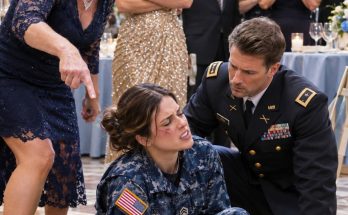
I looked at the woman I had married, the woman who was crying on our bedroom floor.
The guilt in my chest was a physical weight, pressing down on my lungs until I could barely breathe.
I knew then that I had to tell her the truth, or I would lose my soul entirely.
I knelt down beside her and gently took the folder of medical reports from her trembling hands.
Penelope, there is nothing wrong with you, I said, my voice cracking under the strain of my own deceit.
She looked up at me, her eyes red and searching my face for a lifeline.
Then why have I not gotten pregnant, Graham, she whispered, her voice breaking.
I closed my eyes, unable to bear the sight of her pain that I had caused.
Because I went to a specialist three years ago, I confessed, the words tasting like ash in my mouth.
I had a procedure done, and I have been secretly replacing your vitamins with medication that prevents conception.
The silence that followed was louder than any scream she could have unleashed.
Penelope did not yell, and she did not strike me.
She simply stared at me as if I were a stranger who had broken into our home and destroyed everything we held sacred.
You did that to me, she asked, her voice barely audible.
You stole my choice, you stole my dream, and you let me believe I was broken, she continued, the realization dawning on her.
I was so afraid of being a father, Penelope, I pleaded, desperate to make her understand my cowardice.
I thought if we had a child, I would be trapped in a life I was not ready for.
She slowly stood up, wiping the tears from her cheeks with a quiet, devastating dignity.
You were not trapped, Graham, you were just selfish, she said softly.
You wanted the perfect wife, but you did not want the reality of a real family.
That night, she packed a single suitcase.
She did not take the jewelry I had bought her, nor the designer clothes that filled our massive closets.
She only took her favorite books, a few changes of simple clothes, and the handwritten notes she had kept in a wooden box.
I watched her from the doorway, entirely paralyzed by the magnitude of my own stupidity.
The next morning, my lawyer arrived with the divorce papers and the confirmation of the massive transfer.
I had sent her a message earlier that day, offering the money as compensation for my betrayal and my desire to be with another woman.
Penelope looked at the banking notification on her phone.
She then looked at the divorce papers my lawyer held out to her.
Without a single word of argument, she picked up the pen and signed her name on every required line.
Then, she opened her banking app and initiated a full, complete wire transfer back to my corporate account.
She returned every single dollar.
She handed the phone and the papers back to my lawyer.
I do not want your money, Graham, she said, her voice steady and devoid of the warmth I had taken for granted.
And I do not want your excuses.
She picked up her small suitcase and walked out the front door.
I never knew she was hiding an ultrasound in the lining of that bag.
I never knew that despite my sabotage, a miracle had occurred just weeks before my confession.
I never knew that she was carrying twins.
This brings us to the third part of my story, where the true weight of my hidden truth began to settle.
The days following her departure were a blur of hollow victories and empty rooms.
I told myself that I was free to pursue the life I thought I wanted.
I moved my new partner, Victoria, into the sprawling estate that Penelope had made into a home.
Victoria was a socialite who thrived on attention, luxury, and the spotlight of my wealth.
At first, her presence filled the quiet spaces with loud music, extravagant parties, and endless demands.
I mistook her constant need for my attention as passion.
I mistook her desire for my credit cards as appreciation.
But the illusion shattered within the first month.
I would come home from grueling negotiations, expecting the quiet comfort I had always known.
Instead, I was met with complaints about the staff, the decor, and the temperature of the wine.
There were no handwritten notes slipped into my briefcase.
There were no warm meals waiting for me when I worked late.
There was only a cold, echoing mansion that felt more like a museum than a home.
One evening, I found Victoria in the garden, angrily directing the landscapers to tear out the rose bushes Penelope had planted.
She was replacing them with imported marble statues.
I watched the petals fall to the dirt, and a profound sickness washed over me.
I realized then that I had traded a rare, beautiful diamond for a cheap, glittering piece of glass.
I had destroyed the only genuine thing in my life for the sake of my own ego.
This realization marked the beginning of the fourth part of my journey, a slow descent into absolute misery.
Over the next two years, my empire began to show cracks.
My focus was gone, my decisions were clouded by a deep, persistent depression, and my health began to fail.
Victoria’s spending was relentless, and her legal team was always hovering in the background, preparing for a settlement.
I was bleeding money, but worse, I was bleeding my soul.
I spent my nights sitting in Penelope’s old reading nook, staring at the empty space where she used to sit.
I replayed every argument, every ignored comment, and every selfish choice I had ever made.
I realized that my fortune meant absolutely nothing if I had no one to share it with.
I had built a kingdom, but I was the only prisoner inside it.
By the third year, Victoria had finally realized that my emotional decline was affecting my business.
She filed for a massive settlement and left, taking a significant portion of my liquid assets with her.
I let her go without a fight.
I barely noticed her departure.
My mind was entirely consumed by the ghost of the woman I had wronged.
I often wondered if Penelope was happy.
I wondered if she had found someone who treated her with the respect she deserved.
I wondered if she ever thought about me, or if I was completely erased from her memory.
I deserved to be erased.
I deserved to be forgotten.
But fate, it seems, has a strange sense of timing.
This brings us to the fifth part of my story, the moment my entire world was shattered and rebuilt.
It was a rainy Tuesday afternoon in November.
I was sitting in my office, staring blankly at a financial report I could not comprehend.
My assistant, Marcus, walked in with a manila envelope.
Marcus had been with me since the early days of my career, and he was the only person who still looked at me with genuine concern.
He placed the envelope on my desk and looked at me with a mixture of pity and hesitation.
He told me that his private investigator had finally tracked down a lead on Penelope.
My heart slammed against my ribs.
I had spent thousands of dollars trying to find her, but she had been incredibly careful to protect her privacy.
I tore open the envelope with trembling hands.
Inside was a single photograph and a brief written report.
The report stated that she was living in a small coastal town in Maine.
It stated that she had used her own modest savings to open a botanical garden and nursery.
But I barely read the words.
My eyes were locked on the photograph.
It was a candid shot, taken from a distance, of Penelope standing in front of a greenhouse.
She was smiling, a genuine, radiant smile that reached her eyes.
She looked healthier, happier, and more beautiful than I had ever seen her.
But she was not alone.
Standing beside her, holding her hands, were two young children.
A little girl with pigtails, and a little boy with messy dark hair.
The moment I saw the little boy’s face, I dropped everything.
My coffee mug shattered on the hardwood floor.
The financial reports scattered into the air like snow.
I could not breathe.
The boy had my eyes.
He had my jawline.
He had the exact same slight crook in his nose that I had.
He was my son.
And the little girl had Penelope’s gentle smile and her bright, curious eyes.
They were twins.
She had been pregnant when I threw her out.
She had carried my children alone, while I was busy destroying my own life with a woman who did not love me.
A sound escaped my throat, a raw, guttural sob that I had not made since I was a child.
I pushed my chair back and ran out of the office.
Marcus called after me, but I did not stop.
I ran to my car, threw it into gear, and drove to the private airfield.
I did not pack a bag.
I did not call my lawyers.
I just needed to see them.
I needed to know they were real.
This brings us to the sixth part of my story, the desperate journey to the edge of the world.
The flight to Maine felt like it took a century.
I sat in the charter plane, staring out the window, clutching the photograph so tightly my knuckles turned white.
I rehearsed what I would say to her.
I rehearsed the apologies, the explanations, the begging.
But every word felt inadequate.
How do you apologize for stealing a woman’s dream?
How do you apologize for abandoning your own children?
You do not.
You just show up, and you accept whatever punishment she decides to give you.
The plane landed on a small regional airstrip.
I rented a car and began the long drive up the coast.
The scenery was breathtaking, with towering pine trees and the gray, churning ocean beside me.
But I barely saw it.
My mind was entirely focused on the little boy with my eyes.
I imagined his laugh, his first steps, his first words.
I had missed all of it.
I had missed the pregnancy, the birth, the sleepless nights, the first smiles.
The guilt was a physical agony, tearing at my insides.
When I finally reached the small coastal town, the sun was beginning to set.
The air was crisp and smelled of salt and damp earth.
I followed the directions Marcus had texted me, driving down a narrow, winding road lined with wildflowers.
At the end of the road, I saw it.
A beautiful, sprawling botanical garden, filled with vibrant colors and lush greenery.
A wooden sign out front read, Penelope’s Blooms and Botanical Sanctuary.
I parked the car and stepped out.
My legs felt weak, like I was walking through deep water.
I walked through the wrought iron gates, my eyes scanning the winding paths.
The garden was magnificent.
It was a testament to her patience, her love for nature, and her incredible resilience.
She had taken the pain I caused her and turned it into something beautiful.
And then, I saw her.
She was kneeling in the dirt near a bed of blue hydrangeas, gently pruning the leaves.
She wore a simple linen shirt and jeans, her hair tied back in a loose braid.
She looked exactly the same, and yet entirely different.
She looked at peace.
I stopped walking, afraid that if I moved, she would vanish like a mirage.
She must have heard my footsteps, because she paused and looked up.
When her eyes met mine, the pruning shears slipped from her hand and fell into the dirt.
She did not stand up.
She just stared at me, her expression shifting from surprise to a guarded, quiet caution.
This brings us to the seventh part of my story, the confrontation I had dreaded for three years.
I walked slowly toward her, stopping a few feet away.
I wanted to reach out and touch her, but I knew I had lost that right.
Penelope, I whispered, my voice barely carrying over the sound of the ocean breeze.
She slowly stood up, brushing the dirt from her knees.
She looked at my expensive suit, my tired face, and the desperate hunger in my eyes.
Graham, she said, her voice calm and steady.
You should not be here.
I know, I replied, tears finally spilling over my eyelashes.
I know I have no right to be here.
But I saw the photo.
I saw the children.
She crossed her arms, her posture defensive but her eyes filled with a complex mix of emotions.
You saw a photo that was not meant for you, she said softly.
I left you three years ago, Graham.
I left because you made it very clear that I and any potential family were an inconvenience to your grand plans.
I was pregnant when you gave me that money, she continued, her voice trembling slightly.
I found out the day before you confessed your sabotage.
I realized then that you were never going to be the father my children needed.
So I took myself away, and I built a life where they would be loved.
I fell to my knees right there in the dirt.
I did not care about my suit, or my pride, or the fact that she was looking down at me.
I am so sorry, I sobbed, the words tearing out of my throat.
I was a coward.
I was so terrified of losing my control that I destroyed the only thing that actually mattered.
I have lost everything, Penelope.
Victoria took the money, the business is failing, and I am entirely alone.
But seeing them, seeing my children, it woke me up.
Please, let me see them.
Please let me be a part of their lives.
She looked at me for a long time, the silence stretching between us.
I could see the conflict in her eyes, the memory of the pain I had caused warring with the natural empathy she had always possessed.
They are inside the greenhouse, she finally said.
They are helping me pot the new ferns.
But Graham, if you go in there, you cannot just be a visitor.
You cannot buy them toys and leave.
You cannot use your wealth to compensate for your absence.
If you want to know them, you have to earn it.
You have to be a father, not just a biological donor.
I nodded frantically, wiping the dirt and tears from my face.
I will do whatever it takes, I promised.
I will sell the company, I will move here, I will do anything.
She gave me a small, sad smile.
We will see, she said.
Come inside.
This brings us to the eighth part of my story, the moment I finally met my children.
We walked together toward the large glass greenhouse at the back of the garden.
My heart was beating so hard I thought it might crack my ribs.
She pushed open the heavy glass door, and the warm, humid air enveloped us.
The smell of damp soil and green leaves was intoxicating.
In the center of the greenhouse, sitting at a wooden potting table, were the twins.
The little girl looked up and smiled brightly at her mother.
But it was the little boy who captured my entire soul.
He had a smudge of dirt on his cheek, and his dark hair was sticking up in every direction.
He looked exactly like me when I was five years old.
He stared at me with wide, curious eyes, his small hands gripping a plastic trowel.
Mommy, who is that man, the boy asked, his voice a sweet, high pitch that shattered my heart into a million pieces.
Penelope knelt down beside him and gently brushed the hair from his forehead.
This is Graham, she said softly.
He is your father.
The boy tilted his head, studying me with an intensity that mirrored my own.
He did not run to me.
He did not smile.
He just looked at me, evaluating me, just as I had evaluated so many business deals in my life.
But this was not a deal.
This was my son.
Hello, Leo, I said, my voice shaking.
Your mother told me your name is Leo.
And this must be Lily.
The little girl giggled and hid behind her mother’s leg.
Leo did not say hello back.
He just turned back to his pots and continued scooping the soil.
It was a small rejection, but it was the most humbling moment of my entire life.
I had spent millions of dollars commanding the respect of powerful men, but I could not command the respect of my four-year-old son.
And I knew I deserved it.
I spent the next three hours in the greenhouse, sitting on a small wooden stool, watching them work.
I did not try to force interaction.
I just answered their questions when they asked them.
Leo asked me why my shoes were so shiny.
Lily asked me if I liked flowers.
I told Leo I would trade all my shiny shoes for a pair of muddy boots if it meant I could work in the garden with them.
I told Lily that flowers were the most beautiful things in the world, especially the ones she was planting.
When the sun began to set, Penelope told them it was time to wash up.
Leo stood up and looked at me.
Are you coming back tomorrow, he asked, his tone entirely neutral.
The question hit me with the force of a physical blow.
He was not asking because he wanted me to.
He was asking because he was establishing the rules of this new dynamic.
Yes, I said, my voice thick with emotion.
If you will let me, I will be here tomorrow.
And the day after that.
He nodded once, turned around, and walked out to the washing station.
It was the smallest victory, but it was enough to keep me alive.
This brings us to the ninth part of my story, the long road to redemption.
I did not go back to Philadelphia.
I called Marcus from the car and told him to begin the process of liquidating my remaining assets.
I transferred the bulk of my wealth into a trust for Leo and Lily, ensuring they would never have to worry about their future.
I kept only enough to buy a small, modest cottage a mile down the road from Penelope’s garden.
I sold my sports cars, my designer suits, and my luxury watches.
I bought a used pickup truck, a wardrobe of simple clothes, and a pair of sturdy work boots.
The transition was not easy.
I was not used to manual labor, and my hands blistered and bled during the first few weeks.
But every evening, when I went to the garden to help Penelope close up, the pain faded.
I learned how to prune, how to plant, and how to nurture the delicate flora.
Penelope and I developed a slow, cautious rhythm.
We did not talk about the past.
We talked about the weather, the soil, and the children.
She was gracious, but she kept a careful emotional distance.
She was protecting her heart, and I respected that.
I was not there to win her back.
I was there to win my children.
Months turned into a year.
I became a fixture in the garden.
I built new raised beds, fixed the broken irrigation system, and painted the greenhouse frames.
Leo began to accept my presence.
He started handing me tools without being asked.
He would sit beside me on the bench during our lunch breaks, sharing his sandwiches.
One afternoon, while we were planting tomato seedlings, he looked up at me.
My friend Tommy says dads teach their kids how to throw a baseball, he said casually.
My heart skipped a beat.
I do not know how to throw a baseball very well, I admitted honestly.
But I can learn, if you want to teach me.
Leo smiled, a genuine, bright smile that lit up his entire face.
Okay, he said.
We can practice after we finish these plants.
That evening, I sat on the porch of my small cottage and wept.
It was the first time I had cried tears of pure, unadulterated joy.
I was finally becoming a father.
This brings us to the tenth and final part of my story, the realization of true wealth.
It has been five years since I first walked through the gates of Penelope’s garden.
Leo is nine years old now, and he is the smartest, kindest boy I have ever known.
He loves botany, he reads constantly, and he has a fierce protective streak over his little sister.
Lily is nine as well, a vibrant, artistic soul who paints the flowers she grows.
They call me Dad.
They do not know the sordid details of my past, the sabotage, or the millions of dollars I once threw away.
Penelope and I decided to shield them from the ugliest parts of my history.
They just know that I made mistakes, that I left, and that I came back to make things right.
Penelope and I are not married.
We may never be married.
The trust between us was broken in a way that takes a lifetime to fully repair.
But we are partners in the most important endeavor of our lives.
We share dinners, we walk on the beach at sunset, and we support each other through the challenges of raising two incredible children.
Last night, I was sitting in the living room of my cottage.
Leo was asleep on the couch, his head resting on my chest.
Lily was curled up in the armchair, a book resting on her lap.
Penelope was sitting beside me, her hand resting gently over mine.
I looked at the simple wooden walls, the worn rug, the quiet, peaceful room.
I thought about the mansions I had owned, the cars I had driven, the bank accounts that had once defined my entire existence.
I realized then the great lie I had lived by for forty years.
I had spent my entire life trying to buy happiness, trying to control my environment, trying to secure my legacy with money.
But true wealth is not found in a bank account.
True wealth is the sound of your child’s breathing as they fall asleep in your arms.
True wealth is the smell of damp earth and blooming flowers after a long day of work.
True wealth is the quiet, enduring grace of a woman who forgave you when you did not deserve it.
I squeezed Penelope’s hand, and she squeezed back.
I had offered her a hundred and fifty million dollars to leave my life.
She had returned every single cent.
And in doing so, she had given me the only thing of infinite value.
She gave me a second chance to be a man.
She gave me a family.
She gave me a life that actually meant something.
I closed my eyes, listening to the steady rhythm of my children’s breathing, and for the first time in my entire life, I was truly rich.
PART 11 The Ghost That Refused to Stay Buried
The peaceful rhythm of my new life was shattered on a crisp Tuesday morning in October.
I was in the greenhouse, carefully repotting a rare ghost orchid that Penelope had been nurturing for months.
The air was thick with the scent of damp earth and sweet nectar, a smell that had become my sanctuary.
Leo was sitting on a wooden stool nearby, quietly sketching the delicate white petals in a worn notebook.
Lily was humming a soft tune, organizing a tray of terracotta pots by size and color.
For the first time in my forty-six years of life, I felt a profound, unshakable sense of belonging.
I was not Graham Whitfield, the ruthless Philadelphia real estate titan.
I was just Graham, a father, a partner, a man who had finally learned how to cultivate life instead of merely acquiring it.
Then, the heavy glass door of the greenhouse swung open, letting in a blast of cold autumn wind.
I looked up, expecting to see Penelope returning from the main office with a cup of tea.
Instead, I saw a man in a sharp, charcoal-gray suit holding a leather briefcase.
He looked entirely out of place among the lush greenery and the children.
His eyes scanned the room with a mixture of disdain and clinical detachment before locking onto me.
My stomach dropped into a bottomless abyss, and the trowel slipped from my dirt-covered hands.
Graham Whitfield, the man said, his voice echoing unnaturally in the humid space.
I am here to serve you with legal documents on behalf of my client, Victoria Sterling.
The name hit me like a physical blow, dragging me instantly back to the dark, suffocating world I had abandoned.
Leo looked up from his sketchbook, his dark eyes widening as he sensed the sudden, terrifying shift in the atmosphere.
Lily stopped humming and hid behind her brother’s stool, gripping his shirt tightly.
I stepped between the man and my children, my heart hammering against my ribs like a trapped bird.
You have the wrong place, I said, my voice low and trembling with a rage I had not felt in five years.
These are children, and this is a private sanctuary.
The lawyer did not flinch, merely pulling a thick stack of papers from his briefcase.
I am required to hand-deliver these summons, Mr. Whitfield, he stated coldly.
Your ex-wife is filing an emergency petition for full custody of the minors, citing severe psychological instability and financial ruin.
He stepped forward and thrust the papers toward my chest.
I took them with shaking, soil-stained hands, staring at the bold, legal letterhead.
The world around me began to spin, the vibrant colors of the greenhouse blurring into a sickening wash of green and brown.
Victoria was back, and she was not here for an apology.
She was here for war.
PART 12 The Architecture of a Nightmare
I walked the lawyer out of the garden in a daze, my mind racing through a thousand catastrophic scenarios.
I made him leave quickly, terrified that his presence would traumatize the children or alert Penelope before I could process the threat.
When I finally returned to the greenhouse, Penelope was standing in the doorway, her face pale and her eyes wide with concern.
She had seen the black sedan idling at the end of the driveway.
Graham, what was that, she asked, her voice tight with a fear that mirrored my own.
Who was that man, and why did he look at you like you were a criminal.
I looked down at the stack of papers in my hands, the heavy legal jargon blurring before my eyes.
I walked over to the wooden potting table and set the documents down gently, as if they were made of explosive glass.
I took a deep, shuddering breath, forcing myself to meet her gaze.
It is Victoria, I said, the name tasting like poison on my tongue.
She is filing an emergency custody petition.
Penelope’s hand flew to her mouth, and she let out a small, choked gasp.
She stepped back, leaning against the wooden frame of the table as if her legs could no longer support her.
But you have been here for five years, she whispered, her eyes searching my face for a lifeline.
You have been a perfect father.
You have never missed a day, never raised your voice, never done anything to suggest you are unstable.
I know, I said, my voice cracking under the weight of my own history.
But Victoria is not arguing about my parenting.
She is arguing about my sanity.
I picked up the papers and read the core of her claim.
Victoria was leveraging the medical records from my severe depressive breakdown three years ago, right after she left me.
She was claiming that my sudden abandonment of my empire, my move to a rural town, and my obsession with gardening were symptoms of a psychotic break.
She was arguing that I was legally incompetent and that the trust I had set up for the children was the product of a delusional mind.
She wanted the court to invalidate the trust, seize the assets, and award her sole custody to manage the funds.
It was a brilliant, ruthless, and entirely fabricated legal strategy.
She knew I would never fight her in a public courtroom because it would expose the children to a media circus.
She was using my redemption as proof of my madness.
Penelope read the document over my shoulder, her breathing growing shallow and rapid.
She will try to take them, she said, the realization dawning on her with horrifying clarity.
She will use the law to rip them away from you, and by extension, from me.
I closed my eyes, a profound, exhausting sorrow washing over me.
I had thought I had escaped the labyrinth of my past.
I had thought I had built a fortress of peace around my new life.
But the ghosts of the Whitfield legacy do not stay buried.
They always claw their way back to the surface.
PART 13 The Shadow of the Whitfield Legacy
That night, after the children were finally asleep, Penelope and I sat on the small porch of my cottage.
The ocean breeze was cold, carrying the sharp scent of pine and salt.
I held a glass of whiskey I had not touched, staring out into the pitch-black darkness.
Penelope sat beside me, her arms wrapped tightly around herself against the chill.
We had not spoken for hours, the silence heavy with the weight of the impending battle.
Finally, she turned to me, her eyes reflecting the pale moonlight.
Tell me about your father, she said softly.
I flinched, the question striking a nerve I had spent a lifetime trying to numb.
My father, Arthur Whitfield, was a man who believed that love was a transaction and power was the only true currency.
He built the real estate empire from nothing, crushing anyone who stood in his way.
He was a titan of industry, admired by the public and feared by everyone who knew him.
But behind the closed doors of our massive, echoing mansion, he was a tyrant.
He died twenty years ago, I said, my voice barely above a whisper.
He was sixty-five, and he suffered a massive coronary while sitting alone in his mahogany-paneled study.
The paramedics said he was likely dead before he hit the floor.
Penelope reached out and gently placed her hand over mine, her touch a stark contrast to the cold memory.
When I think of his death, I do not feel sadness, I continued, the words spilling out like a broken dam.
I feel a terrifying sense of inevitability.
He died surrounded by millions of dollars, by priceless art, by the deeds to a hundred buildings.
But he died entirely alone.
His final resting place is a massive, cold marble mausoleum in the city cemetery.
It is a monument to his ego, not a tribute to his life.
I visited it once, after the funeral, and I realized that the heavy stone doors were not keeping the world out.
They were keeping him trapped inside with his own emptiness.
I looked at Penelope, tears finally spilling over my eyelashes.
When Victoria served me those papers today, I felt a panic so deep it paralyzed me.
I was not just afraid of losing Leo and Lily.
I was afraid that my father’s blood was in my veins, and that his curse was finally coming for me.
I was afraid that no matter how much I changed, I was destined to end up in a cold, stone box, having destroyed the only people who ever truly loved me.
Penelope shifted closer to me, wrapping her arms around my shoulders and pulling my head against her chest.
You are not Arthur Whitfield, she said fiercely, her voice trembling with emotion.
Arthur used his wealth to build walls and isolate himself.
You used your wealth to build a bridge and come back to us.
Arthur died alone in a study full of paper.
You are sitting on a porch full of love, with a family that is waiting for you to fight for them.
Her words were a lifeline, pulling me back from the edge of the abyss.
I realized then that I could not let Victoria win.
If I let her take the children, if I let her drag me back into the sterile, ruthless world of corporate litigation, I would be validating my father’s legacy.
I would be proving that the Whitfield men were incapable of holding onto anything good.
I wiped my face, the tears drying in the cold night air.
I will not let her take them, I said, my voice hardening with a resolve I had not felt since my days in the boardroom.
I will not let her use my past to destroy our future.
But I cannot fight her with money, Penelope.
If I start playing the billionaire tyrant, I will become the monster she is trying to paint me as.
I have to fight her with the truth.
PART 14 The Strategy of Truth
The next morning, I drove into the city to meet with Marcus, my former chief of staff and current legal liaison.
We sat in a small, nondescript coffee shop far away from the glass towers of my old life.
Marcus looked older, his hair graying at the temples, but his eyes were as sharp as ever.
He laid out the legal landscape with brutal honesty.
Victoria’s legal team is formidable, Marcus explained, tapping his pen against the table.
They have filed the petition under seal, which means it will not be public record immediately.
But they are demanding an emergency psychological evaluation of you.
If you refuse, they will argue you are hiding something.
If you comply, their hired psychiatrists will twist your depression and your lifestyle change into a diagnosis of severe instability.
I took a slow sip of my black coffee, my mind working through the labyrinth of her strategy.
She is banking on my silence, I said.
She knows I will not subject Leo and Lily to a public custody battle.
She thinks I will just hand over the trust assets to make the problem go away.
Exactly, Marcus nodded.
But there is a flaw in her armor.
He pulled a thin folder from his briefcase and slid it across the table.
I did some digging into Victoria’s current financial situation.
The money she took from you when she left was not just spent on luxury.
She invested it in a series of highly volatile, fraudulent tech startups.
She is completely bankrupt, Graham.
She is facing federal investigations for embezzlement from her own board of directors.
This custody petition is not about the children.
It is a desperate, illegal attempt to access the trust fund you set up for them to cover her legal fees and avoid prison.
A cold, hard clarity washed over me.
Victoria was not a mastermind.
She was a drowning woman trying to pull my children under the water to keep herself afloat.
We do not need to prove I am sane, I said, a fierce smile touching my lips for the first time in days.
We need to prove she is a fraud.
I want you to subpoena every financial record she has touched in the last three years.
I want the federal investigators to see that she is trying to use a child custody case to launder stolen money.
Marcus smiled, a genuine, predatory grin that reminded me of the old days.
But this time, we were not fighting for profit.
We were fighting for family.
I will have the subpoenas drafted by noon, he said.
But Graham, you need to be prepared.
Once we expose her, she will lash out.
She will try to destroy your reputation, Penelope’s garden, everything you have built here.
Let her try, I said, my voice steady and unyielding.
I spent forty years building an empire of glass and steel.
I know exactly how to shatter it.
PART 15 The Boardroom Confrontation
The mediation session took place three weeks later in a sterile, windowless conference room in downtown Philadelphia.
The air conditioning was blasting, but I was sweating through my simple button-down shirt.
I had refused to wear a suit.
I wanted Victoria to see the man I had become, not the man she had married.
Penelope sat beside me, her hand resting firmly on my knee, a silent anchor in the storm.
Across the table, Victoria sat flanked by three expensive lawyers.
She looked immaculate, her blonde hair perfectly styled, her diamond jewelry catching the harsh fluorescent light.
But I could see the cracks in her facade.
Her eyes were bloodshot, her hands trembled slightly, and she looked thinner, her beauty sharpened by stress and desperation.
She looked at me with a mixture of hatred and contempt.
Graham, you look terrible, she sneered, her voice dripping with venom.
Have you completely lost your mind, playing in the dirt in some backwoods town.
I ignored the insult, keeping my eyes locked on her lead attorney.
Let us skip the theatrics, Victoria, I said, my voice calm and echoing in the quiet room.
You are not here because you care about the children.
You are here because you are broke, you are under federal investigation, and you need the trust fund to pay for your defense.
Victoria’s face flushed a deep, angry red.
She leaned forward, her composure cracking.
You arrogant fool, she spat.
You think you can just buy your way into their lives and then play the saint.
You sabotaged Penelope.
You threw me out.
You are a broken, pathetic man who snapped under the pressure of his own mediocrity.
Her lawyer placed a hand on her arm, whispering urgently in her ear.
I opened the folder in front of me and slid a single document across the table.
It was a bank statement, detailing the exact moment she had transferred two million dollars from her failing company into an offshore account.
I am not playing the saint, I said quietly.
I am just a man who knows how to read a balance sheet.
If we go to trial, I will not just defend my sanity.
I will hand this document, along with the rest of your financial records, directly to the FBI.
The room fell into a dead, suffocating silence.
Victoria stared at the document, all the color draining from her face.
Her lawyers began whispering frantically to one another, shuffling their papers in a panic.
You are bluffing, she whispered, but her voice lacked any real conviction.
I am not, I replied.
I will withdraw the petition today.
You will sign a legally binding agreement stating that you have no interest in the children and no claim to the trust.
In exchange, I will not report your embezzlement to the authorities.
You will walk away with your freedom, but you will never come near my children again.
Victoria looked at me, her eyes wide with a mixture of shock and dawning realization.
She was looking for the old Graham, the man who would negotiate, the man who would try to find a compromise to avoid a scene.
But that man was dead.
He had died in a cold, mahogany study twenty years ago, and I had buried him in the soil of Penelope’s garden.
If you do not sign, I will make a phone call right now, I said, pulling out my phone.
Victoria’s lead lawyer looked at her, his expression grim.
Sign the papers, Victoria, he said coldly.
She has the leverage, and she will use it.
With a trembling hand, Victoria picked up the pen.
She signed her name on the dotted line, effectively surrendering her claim to my children.
She dropped the pen, stood up, and walked out of the room without looking back.
I let out a breath I felt like I had been holding for three years.
Penelope squeezed my knee, and I looked over at her, seeing the profound relief and pride in her eyes.
We had won.
PART 16 The Final Resting Place
The drive back to the coastal town felt lighter, the heavy burden of the past finally lifted from my shoulders.
When we arrived at the garden, Leo and Lily were waiting for us by the gate.
They ran to us, their laughter ringing out like bells in the crisp autumn air.
Leo grabbed my hand, his small fingers wrapping around my dirt-stained ones.
Dad, you are back, he said, looking up at me with bright, trusting eyes.
I am back, son, I said, my voice thick with emotion.
I am never leaving again.
That weekend, I took a drive back into the city, alone.
I drove to the massive, wrought-iron gates of the city cemetery.
I walked up the winding stone path to the Whitfield mausoleum.
The heavy marble doors stood imposing and cold, a monument to a man who had conquered the world but lost his soul.
I did not go inside.
I did not need to pay my respects to a ghost.
I stood before the stone facade, the autumn wind whipping through the bare trees.
I thought about the legacy my father had tried to force upon me.
I thought about the fear that had driven me to sabotage Penelope, to push away the only real love I had ever known.
I realized then that a legacy is not built in stone, and it is not measured in bank accounts.
A legacy is built in the quiet moments.
It is built in the smell of damp earth, in the sound of a child’s laughter, in the gentle touch of a woman who forgives you.
I turned my back on the mausoleum and walked back to my truck.
I had a garden to tend to, and a family that was waiting for me.
As I drove back down the coast, the sun began to set, painting the sky in brilliant shades of gold and purple.
I had once offered a woman a hundred and fifty million dollars to leave my life.
She had returned every single cent.
And in doing so, she had given me the universe.
I pulled into the driveway of the cottage, the smell of woodsmoke and roasting garlic wafting from the chimney.
I walked through the front door, and the warmth of the home enveloped me.
Penelope was at the stove, stirring a pot of soup, while Leo and Lily sat at the table, doing their homework.
They looked up and smiled at me, a collective expression of pure, unadulterated love.
I walked over and wrapped my arms around Penelope, kissing the top of her head.
I am home, I whispered.
And for the first time in my life, I truly was.
PART 17 The Unspoken Ghost of that Tuesday
The quiet that followed Victoria’s defeat was a strange, unfamiliar territory for me.
I had spent the last five years in a state of constant, anxious motion.
I was always working, always tending to the garden, always anticipating the next disaster.
But with Victoria gone and the legal shadows banished, a profound stillness settled over our little coastal sanctuary.
It was a Friday evening in late November, and a gentle rain was tapping against the windows of the cottage.
Penelope was sitting in her favorite armchair, a thick wool blanket draped over her legs, reading a worn paperback novel.
Leo and Lily were asleep in their rooms, exhausted from a long week of helping me harvest the late autumn root vegetables.
I sat across from her, holding a mug of chamomile tea, just watching the rise and fall of her chest.
She looked so peaceful, so entirely removed from the chaotic world that had tried to tear us apart.
But as I looked at her, a lingering shadow from my past crept into the edges of my mind.
There was still one mystery that I had never fully solved, one gap in the timeline of our tragedy that I had been too afraid to examine.
I knew she had returned the money.
I knew she had signed the papers.
I knew she had walked out the door with a single suitcase.
But I did not know what happened in the hours immediately after she left my driveway.
I did not know how she survived the sheer physical and emotional shock of that day.
I set my mug down on the wooden coffee table, the soft clink sounding unnaturally loud in the quiet room.
Penelope looked up from her book, her eyes meeting mine with a soft, questioning gaze.
She closed the book and marked her page with a dried pressed fern, setting it aside.
She could always read my mind, even after all these years of silence and rebuilding.
What is it, Graham, she asked, her voice a gentle murmur that barely carried over the sound of the rain.
I leaned forward, resting my elbows on my knees, and clasped my hands together to hide their slight trembling.
I need to know, I said, my voice thick with an emotion I could not quite name.
I need to know what happened after you walked out that door.
Penelope’s expression shifted, a fleeting shadow passing over her features before she looked down at her hands.
You have never asked me about that day, she said softly.
I know, I replied.
I was too ashamed to look at it.
I was too terrified of the pain I had caused you.
But I need to understand, Penelope.
I need to know the whole truth, so I can finally lay the ghost of that man to rest.
She took a deep, shuddering breath, and the silence stretched between us, heavy with the weight of seven years ago.
PART 18 The Hospital Room Confession
She did not look at me as she began to speak, her eyes fixed on the dancing flames in the fireplace.
When I walked out of your front door, I did not go home, she began, her voice barely above a whisper.
I got into my car and drove for exactly three miles.
And then I had to pull over onto the shoulder of the road because I could no longer see through the pain.
My heart slammed against my ribs, a cold dread washing over me as her words painted a picture I never wanted to see.
What kind of pain, I asked, my voice cracking.
A sharp, tearing agony in my lower abdomen, she said, finally looking up at me with eyes that held a lifetime of unshed tears.
I had been having cramping for weeks, Graham.
I thought it was just the stress of my body trying to conceive, the stress of your emotional distance.
But that afternoon, the cramping turned into a blinding, white-hot agony.
I realized then that I was not just pregnant.
I was in active, premature labor, and my body was failing.
I gasped, the air suddenly gone from my lungs, my hands gripping the edges of my chair so tightly my knuckles turned white.
I called an ambulance from the payphone at a gas station, she continued, her voice steadying as she forced herself to relive the trauma.
They rushed me to the emergency room at Pennsylvania Hospital.
The doctors told me I was experiencing severe placental abruption, and the twins were in extreme distress.
They told me I was losing too much blood, and that I might not survive the night.
Tears spilled over my eyelashes and tracked hot and fast down my cheeks.
I had been sitting in my massive, empty house, drinking scotch and feeling sorry for myself, while the woman I loved was bleeding out in a hospital bed.
I am so sorry, I whispered, the words feeling entirely inadequate, pathetic and small.
Penelope reached across the small space between us and gently placed her hand over mine.
Her skin was warm, a stark contrast to the icy horror gripping my heart.
While they were prepping me for an emergency cesarean section, the nurse asked me if I had any next of kin to contact, she said.
I told her I was divorced.
I told her there was no one.
But then, my lawyer called my cell phone to confirm the wire transfer and the signed documents.
I realized that if I died on that operating table, the twins would be left entirely alone, with no legal guardian and no access to the funds you had originally transferred.
So, from my hospital bed, hooked up to IVs and bleeding through the sheets, I called your lawyer back.
I told him to bring the final dissolution of marriage papers to the hospital.
I signed them with a shaking hand while a nurse held the clipboard for me, just minutes before they wheeled me into surgery.
I signed them to ensure that if I died, you would have sole legal custody of the children, and they would inherit your estate.
I broke down completely, burying my face in my hands as a raw, guttural sob tore from my throat.
She had signed away her rights to her children while she was literally dying, just to protect them.
She had sacrificed everything, while I had sacrificed nothing.
PART 19 The Sabotage Revealed as a Failure of Conscience
I sat there for a long time, weeping uncontrollably, while Penelope gently stroked my hair.
When my tears finally subsided into exhausted hiccups, I looked up at her, my vision blurred.
But there is still one thing I do not understand, I said, my voice raspy and broken.
I sabotaged your vitamins.
I paid Dr. Evans to replace your prenatal vitamins with high-dose contraceptives.
How did you get pregnant if I was poisoning you with birth control?
Penelope’s expression softened, and a sad, knowing smile touched her lips.
That is the final secret, Graham, she said quietly.
Dr. Evans could not do it.
My breath hitched in my throat.
What do you mean, I asked, staring at her in absolute shock.
Two days before you confessed your sabotage to me, Dr. Evans came to see me at the garden center, she explained.
He was shaking, pale, and terrified.
He told me that you had hired him to alter my medication, but that he was a physician, not a murderer.
He told me he could not bring himself to secretly drug a woman and destroy her fertility.
He said he had swapped the bottles back to the real prenatal vitamins the day after you gave him the money.
He begged me to forgive him for his cowardice in not telling you the truth, and he begged me to forgive you for your cruelty.
The revelation hit me with the force of a physical blow, knocking the remaining breath from my lungs.
My grand, evil plan, my calculated act of control, had been entirely thwarted by the conscience of the man I had hired.
I had spent months torturing myself with guilt, believing I was successfully preventing a pregnancy, while Penelope was actually getting pregnant naturally.
You knew, I whispered, the realization dawning on me with horrifying clarity.
You knew I thought I was controlling you.
I knew, she nodded, a single tear slipping down her cheek.
But I did not tell you, because I realized that your need for control was a sickness.
I realized that if I told you the truth, you would just find another way to sabotage me, or you would become even more paranoid and abusive.
I let you believe you had won, so that I could quietly pack my bags, take the real vitamins, and escape with my children.
I had played the villain in my own story, entirely unaware that my script had been rewritten by someone else’s mercy.
The sheer magnitude of my arrogance was suffocating.
I had thought I was a mastermind, a titan of industry manipulating the board.
But I was just a frightened, foolish boy playing games in the dark, while Penelope was the one actually navigating the light.
Thank you, I whispered, squeezing her hand with all the strength I had left.
Thank you for surviving.
Thank you for forgiving me.
She leaned forward and pressed her forehead against mine, closing her eyes.
We are here now, she whispered.
That is all that matters.
PART 20 The Nor’easter
The profound peace of her confession was shattered three hours later by the blaring, unnatural shriek of the emergency weather radio on the kitchen counter.
I jumped up, my heart instantly shifting from emotional reflection to primal, protective alertness.
The automated voice of the National Weather Service cut through the quiet of the cottage, warning of a rapid and severe intensification of the coastal storm.
A historic Nor’easter had stalled over the Atlantic, and it was making an unexpected, violent turn directly toward our coastline.
Wind gusts of up to ninety miles per hour were expected to hit within the hour, accompanied by massive storm surges and torrential rain.
I ran to the window and peered out into the darkness.
The gentle tapping rain had transformed into a horizontal sheet of water, and the massive pine trees at the edge of the property were already bending violently in the gale.
Penelope was standing beside me, her face pale as she looked out at the raging storm.
The greenhouse, she gasped, her voice tight with sudden panic.
Graham, the old glass panels on the west wing.
They were not secured properly after the autumn repairs.
If that roof blows off, the storm will destroy the entire botanical collection.
It will destroy the ghost orchids, the rare ferns, everything we have spent five years building.
I did not hesitate.
I grabbed my heavy waterproof coat, my boots, and a high-powered flashlight from the mudroom.
Wake the children, I told her, my voice calm and authoritative.
Move them to the interior hallway on the ground floor, away from the windows.
I am going to the greenhouse to secure the west wing.
No, Penelope said, grabbing my arm, her eyes wide with terror.
It is too dangerous.
The wind is already tearing branches from the trees.
You cannot go out there.
The greenhouse is just glass and metal, Graham.
It can be rebuilt.
You cannot be replaced.
I gently but firmly removed her hand from my arm, looking deeply into her eyes.
That greenhouse is your soul, Penelope.
It is the physical manifestation of your resilience, your healing, and your life’s work.
I will not let the storm take it from you.
I will secure the panels, and I will be right back.
Before she could argue further, I pushed open the heavy front door and stepped out into the howling abyss.
PART 21 The Collapse and the Rescue
The wind hit me like a solid physical wall, nearly knocking me off my feet the second I crossed the threshold.
The rain was so heavy it felt like needles driving into my skin, and the roar of the ocean was a deafening, continuous thunder.
I kept my head down, fighting my way across the muddy lawn toward the glowing silhouette of the greenhouse.
When I reached the heavy glass doors, I had to use my entire body weight to push them open against the wind pressure.
Inside, the noise was slightly muffled, but the structure was groaning and shuddering violently.
The west wing, the oldest part of the greenhouse, was flexing dangerously in the gale.
I could see the heavy glass panels rattling in their frames, the metal brackets screaming under the immense pressure.
I grabbed a heavy coil of nylon rope and a hammer from the workbench, my hands slipping on the wet metal.
I climbed up the wooden ladder to the main support beam, tying the rope around the central steel girder and anchoring it to the heavy cast-iron base of the central fountain.
I was pulling the rope taut, trying to brace the collapsing roof, when a sound like a gunshot echoed through the space.
One of the main support brackets on the west wing snapped.
The entire glass roof section groaned, tilting inward at a terrifying angle.
I slipped on the wet ladder, my boots losing traction on the muddy floor.
I fell hard, my shoulder slamming into the iron base of the fountain, a blinding pain shooting down my arm.
I looked up just in time to see the massive glass and steel frame giving way, plunging directly toward the rare ghost orchid bed and the potting tables where we had spent countless hours together.
I threw myself forward, covering the delicate plants and the wooden tables with my own body, bracing for the impact.
The crash was apocalyptic.
Glass shattered into a million glittering shards, and heavy steel beams slammed into the earth just inches from my head.
The wind howled through the massive breach in the roof, tearing at my clothes and blinding me with rain and debris.
I lay there in the mud and the broken glass, my body trembling, my shoulder screaming in agony, but my arms wrapped protectively around the surviving orchids.
I had saved the core of her sanctuary.
I had taken the hit so her life’s work could survive.
I lay there for a long time, listening to the storm rage above me, waiting for the strength to stand up.
When I finally pushed the debris off my back and staggered to my feet, I saw a figure standing in the doorway of the greenhouse.
It was Penelope.
She was holding a flashlight, her face pale, her eyes scanning the destruction until they locked onto me.
She dropped the flashlight and ran through the mud and the broken glass, throwing her arms around my neck, sobbing uncontrollably.
You foolish, brave, wonderful man, she cried into my wet coat.
I thought you were dead.
I thought I had lost you.
I wrapped my good arm around her, burying my face in her wet hair, breathing in the scent of rain and earth and life.
I am here, I whispered.
I am right here.
PART 22 The Vow in the Ruins
The storm broke just before dawn, leaving behind a sky the color of bruised purple and a landscape littered with fallen branches and debris.
I sat on the wooden bench in the center of the ruined greenhouse, my left arm in a makeshift sling, watching the morning sun pierce through the broken glass roof.
The west wing was completely destroyed, but the central structure, the orchids, and the ferns had survived.
Penelope was kneeling in the mud beside me, gently cleaning a small cut on my cheek with a damp cloth.
Leo and Lily were sitting on the dry wooden table behind us, quietly sharing a thermos of hot cocoa, their eyes wide with the adrenaline of the night.
The physical pain in my shoulder was a dull, throbbing ache, but it was entirely eclipsed by the profound, overwhelming peace in my chest.
I looked at the shattered glass glittering in the morning light, and I realized that it did not look like destruction.
It looked like a mosaic.
It looked like the beautiful, broken, reassembled pieces of my own life.
Penelope finished cleaning my face and sat down beside me, resting her head on my good shoulder.
We sat in silence for a long time, listening to the dripping of the rain from the remaining panes and the soft breathing of our children.
Graham, she said softly, her voice carrying a weight of absolute certainty.
When you signed the divorce papers seven years ago, you thought you were ending our story.
You thought you were closing a book that had become too heavy to carry.
But you were wrong.
She turned to look at me, her eyes bright and fierce in the morning light.
You were just finishing the prologue.
This, she gestured to the ruined greenhouse, to the children, to the mud on our clothes.
This is the actual story.
I looked at her, my throat tight with an emotion so pure it felt like it might crack my ribs.
I reached out with my good hand and gently traced the line of her jaw, my thumb brushing away a smudge of dirt.
I do not want to just be your partner, Penelope, I said, my voice steady and resonant in the quiet space.
I do not want to just be the man who came back and fixed the roof.
I want to be the man who stands in the ruins with you and builds it all over again, every single day, for the rest of my life.
I want to be your husband, not in the eyes of the law, but in the eyes of the earth, the rain, and these children.
I want to bind my soul to yours, so that no storm, no lawyer, and no ghost of my past can ever tear us apart.
Penelope’s breath hitched, and a single, brilliant tear slipped down her cheek, catching the morning light.
She did not say yes with words.
She did not need to.
She simply leaned forward and pressed her lips to mine, a kiss that tasted of salt, rain, and an eternity of forgiveness.
Behind us, Leo and Lily cheered softly, their laughter ringing out like a bell in the crisp morning air.
I closed my eyes, holding the woman I loved, listening to the heartbeat of my children, and feeling the solid earth beneath my feet.
I had once offered a hundred and fifty million dollars to be free of her.
She had returned every single cent.
And in the ruins of a shattered greenhouse, on a quiet morning in Maine, I finally understood the greatest truth of my existence.
I was not a man who had lost his fortune.
I was a man who had finally found his wealth.
PART 23 The Wolf at the Garden Gate
The profound peace we found in the ruins of the greenhouse lasted for exactly six months.
Spring arrived in Maine, painting the coastline in vibrant shades of green and bringing a warm, gentle breeze off the Atlantic.
Leo and Lily were thriving, their laughter echoing through the newly rebuilt glass panels of the sanctuary.
I had fully embraced my life as a gardener, my hands permanently stained with soil, my mind quiet and focused.
But the past has a way of tracking you down, no matter how far you run or how deep you hide.
It happened on a quiet Thursday afternoon, while I was teaching Leo how to properly graft a rare climbing rose.
The crunch of tires on the gravel driveway made us both look up.
A sleek, black, armored SUV pulled up to the gate, looking entirely alien against the backdrop of wildflowers and pine trees.
My stomach tightened, a familiar, cold dread washing over me as the engine cut out.
I wiped my hands on my canvas apron and walked toward the gate, telling Leo to go inside and find his mother.
The driver’s door opened, and a man stepped out into the bright sunlight.
He was in his late sixties, wearing a bespoke charcoal suit that cost more than my old pickup truck.
His hair was silver, his face lined with the kind of deep wrinkles that only come from a lifetime of scowling.
But it was his eyes that made my blood run cold.
They were pale, calculating, and entirely devoid of warmth.
I recognized him instantly, though I had not seen him in over twenty years.
Silas Vance.
He had been my father’s business partner, the co-architect of the Whitfield real estate empire, and a man whose ruthlessness made my father look like an amateur.
Graham, Silas said, his voice a smooth, gravelly baritone that echoed in the quiet afternoon.
I must admit, when my investigators told me you were playing in the dirt, I thought they were mistaken.
I gripped the iron bars of the gate, my knuckles turning white as I stared at the ghost of my father’s darkest days.
You have a lot of nerve showing up here, Silas, I said, my voice low and dangerous.
What do you want.
He smiled, a thin, cruel stretching of his lips that did not reach his eyes.
I want the land, Graham.
I am developing the entire coastline, and your little botanical sanctuary is sitting right in the middle of my projected luxury marina.
I will give you five million for the property.
It is a generous offer for a patch of weeds and broken glass.
I laughed, a harsh, bitter sound that startled a flock of birds from the nearby trees.
The land is not for sale, Silas.
Not for five million, not for fifty million, and certainly not to the man who helped my father build a monopoly on human misery.
Silas’s smile vanished, his eyes turning to chips of ice.
You are a fool, Graham, just like your father was at the end.
He thought he could just walk away, too.
He thought he could hide his assets and protect his little secrets.
But the ocean always claims what is mine.
He turned and got back into the SUV, the engine roaring to life.
I will not ask again, Graham.
Sell the land, or I will bury you in litigation until you beg for mercy.
PART 24 The Ghost in the Garden
I watched the black SUV disappear down the winding coastal road, my mind racing with a thousand tactical scenarios.
Silas Vance was not a man who made empty threats.
He was a corporate predator who had swallowed smaller companies whole and spat out their bones.
If he wanted this land, he would use every legal, financial, and illegal weapon in his arsenal to take it.
I turned around and walked back toward the greenhouse, my heart pounding a heavy, erratic rhythm against my ribs.
When I pushed open the glass doors, I found Penelope standing near the potting tables, her face pale and her hands trembling.
She had heard the conversation.
She had seen Silas Vance.
But it was the look in her eyes that truly terrified me.
It was not just fear.
It was a profound, haunting recognition.
Penelope, what is it, I asked, stepping toward her, my voice soft with concern.
Why do you look at me like you have seen a ghost.
She swallowed hard, her eyes darting to the window where the SUV had disappeared.
That man, she whispered, her voice barely audible over the hum of the ventilation fans.
That is Silas Vance.
I know, I replied, gently placing a hand on her shoulder.
He was my father’s partner.
He is trying to force us to sell the garden for his development project.
Penelope shook her head slowly, a single tear slipping down her cheek.
No, Graham.
You do not understand.
I knew Silas Vance long before I ever met you.
The words hit me like a physical blow, knocking the breath from my lungs.
I stared at her, my mind struggling to process the impossibility of her statement.
What do you mean, I asked, my voice cracking.
Penelope walked over to a wooden bench and sat down heavily, burying her face in her hands.
When I told you I was working at a modest garden center when we met, I was telling you a half-truth, she confessed, her voice muffled and thick with emotion.
I was not just a simple florist.
My father, Elias Thorne, was the founder of Thorne Botanicals, one of the largest private horticultural estates on the East Coast.
I gasped, the pieces of the puzzle suddenly slamming together in my mind.
Thorne Botanicals was destroyed twenty-five years ago in a massive, highly publicized corporate liquidation.
It was the first major acquisition of the Whitfield-Vance empire.
My father was ruined, I continued, the realization dawning on me with horrifying clarity.
He lost everything.
He took his own life a year later.
Penelope looked up at me, her eyes red and filled with a lifetime of unshed grief.
Silas Vance orchestrated the hostile takeover, Graham.
He used forged documents and illegal backchannel financing to force my father into bankruptcy.
He stole our family’s legacy, our home, and our livelihood.
When I met you, I was living under an assumed name, working in a small nursery just to survive.
I did not know you were Arthur Whitfield’s son until our third date, when I saw your credit card.
The revelation sent a shockwave through my entire body.
The woman I loved, the woman I had wronged, the mother of my children, was the daughter of the man my father and Silas had destroyed.
Our entire marriage, our entire history, was built on a foundation of blood and betrayal.
Why did you never tell me, I whispered, falling to my knees in front of her.
Because I loved you, she said simply, reaching out to touch my cheek.
And because I believed that you were not your father.
I thought that by loving you, I could break the cycle.
I thought that if we built a life together, we could create something beautiful from the ashes of what they destroyed.
But when you sabotaged my vitamins and threw me out, I realized that the Whitfield curse was stronger than I thought.
I left to protect my children from the same poison that killed my father.
I pulled her into my arms, holding her tightly as she wept against my chest.
The sheer magnitude of the irony was suffocating.
I had destroyed the daughter of my father’s greatest victim, and now, my father’s old partner was here to destroy us both.
But as I held her, a cold, hard fury began to crystallize in my chest.
Silas Vance had taken everything from her.
He had taken everything from me.
And now, he was threatening the only pure, beautiful thing I had left in this world.
I wiped the tears from her face and stood up, my posture straightening.
The gentle, peaceful gardener died in that moment.
The titan of Philadelphia was waking up.
PART 25 The Return of the Titan
That night, after the children were asleep, I sat in my small home office and made a single phone call.
Marcus answered on the first ring, his voice thick with sleep.
Graham, it is midnight, he said, confusion evident in his tone.
Is everything alright.
Wake up the legal team, Marcus, I said, my voice calm, cold, and utterly devoid of mercy.
I need every financial record, every shell company, and every backchannel deal Silas Vance has executed in the last twenty years.
There was a long pause on the other end of the line.
Marcus knew that tone.
It was the tone I used right before I dismantled a rival corporation.
Silas Vance, he repeated slowly.
Graham, he is a ghost.
He operates entirely through proxies and offshore trusts.
He is untouchable.
No one is untouchable, I replied, staring out the window at the dark silhouette of the greenhouse.
He made a mistake, Marcus.
He threatened my family.
I want his empire bleeding by Monday morning.
The next day, I put on a suit.
It was not my old armor of Armani and silk.
It was a simple, dark, tailored suit that fit my broader, calloused shoulders.
I kissed Penelope goodbye, promising her that I would handle the wolf at the gate.
I drove to the airport, boarded my private jet, and flew back to Philadelphia.
The city looked exactly the same, a sprawling grid of glass and steel, indifferent to the souls it crushed.
I walked into the boardroom of my old headquarters, the space I had not entered in five years.
The executive team was waiting for me, looking nervous and confused.
They had thought I was dead, or at least permanently retired to a mental institution.
I stood at the head of the massive mahogany table, looking at the faces of men and women I had once ruled through fear.
We are not here to discuss real estate, I announced, my voice echoing in the silent room.
We are here to discuss a hostile takeover.
For the next forty-eight hours, I did not sleep.
I did not eat.
I sat in a war room with Marcus and a team of forensic accountants, dissecting the Vance empire.
Silas was smart, but he was arrogant.
He believed that because I was living in the woods, I had forgotten how to hunt.
But I had not forgotten.
I had just been waiting for a reason to use the skills again.
We found the weak point in his armor on the second night.
Silas was heavily leveraged in a series of commercial properties in downtown Chicago.
He was using the debt to fund his coastal development projects, including the marina that threatened Penelope’s garden.
If we could trigger a default on his Chicago debt, his entire financial structure would collapse like a house of cards.
I smiled, a cold, predatory expression that felt entirely foreign on my sun-weathered face.
Buy the debt, I ordered the lead accountant.
Buy all of it, through three separate shell companies, and the moment it clears, call in the loan.
PART 26 The Boardroom Execution
The trap was set, and all I had to do was wait for Silas to walk into it.
Three days later, I received a summons to a mediation meeting at a neutral location in New York City.
Silas was panicking.
His lenders had suddenly called in his multi-million dollar loans, demanding immediate repayment.
He needed cash, and he needed it yesterday.
He thought he was calling me in to beg me to sell the Maine property so he could use the land as collateral to save his empire.
I walked into the sleek, glass-walled conference room, my posture relaxed, my hands resting in my pockets.
Silas was sitting at the table, looking haggard, his usual immaculate appearance slightly disheveled.
He glared at me as I took the seat opposite him.
You are playing a dangerous game, Graham, he spat, slamming a fist on the table.
My lenders are threatening to liquidate my assets.
If you do not sign over the deed to the Maine property today, I will personally ensure you are buried in federal prison for tax evasion.
I looked at him with a mixture of pity and profound disgust.
You are not in a position to make threats, Silas.
I pulled a single, thin folder from my jacket and slid it across the polished table.
Silas opened it, his eyes scanning the documents.
As he read, the color drained from his face, leaving him looking like a corpse.
The documents detailed the exact moment my shell companies had purchased his Chicago debt.
They also detailed the immediate foreclosure proceedings I had initiated that very morning.
I own your debt, Silas, I said quietly, my voice carrying the weight of absolute authority.
I own your buildings, your offshore accounts, and your precious coastal development project.
You are entirely bankrupt.
Silas looked up at me, his hands trembling violently.
You would destroy your own inheritance, he whispered, his voice cracking.
Your father built this city.
My father was a tyrant who died alone in a dark room, I replied, my voice hard as iron.
And you are a parasite who fed on his misery.
I am not destroying my inheritance, Silas.
I am taking out the trash.
He slumped back in his chair, defeated, a broken old man staring at the ruins of his empire.
Why, he asked, his voice barely a whisper.
Why are you doing this.
I leaned forward, resting my elbows on the table, and looked deep into his terrified eyes.
Because twenty-five years ago, you destroyed a man named Elias Thorne.
You drove him to suicide, and you stole his life’s work.
Silas’s eyes widened in sudden, dawning horror.
Elias Thorne, he stammered.
The botanist.
His daughter, I said, my voice dropping to a deadly whisper.
His daughter is my wife.
And her garden is the only piece of land on this earth that I care about.
If you ever come within a hundred miles of her, I will not just take your money.
I will take your freedom.
PART 27 The Confession of a Dying Man
Silas Vance did not fight back.
He signed the transfer of the coastal land to me before the sun set that evening.
He walked out of the conference room a ghost, a man who had been entirely erased from the world of power.
But as he reached the door, he paused and looked back at me, a strange, melancholic expression on his face.
Your father, he said softly, his voice trembling.
He did not die alone, Graham.
I stopped packing my briefcase, my heart skipping a beat.
What are you talking about, I asked, my voice tight.
Silas leaned against the doorframe, looking suddenly very old and very tired.
Arthur called me the night he died, he confessed, the words spilling out like a dark secret.
He was sitting in his study, drinking heavily.
He told me that he had found out about what I did to Elias Thorne.
He told me that he was disgusted by my cruelty, and that he was going to dissolve the partnership and make restitution to the Thorne family.
I stared at him, the air in the room suddenly too thin to breathe.
He was going to give the land back, Silas continued, a sad smile touching his lips.
He was going to fix his mistakes.
But I could not let him.
I had too much to lose.
So, I told him that if he went through with it, I would expose his own illegal dealings to the SEC.
I blackmailed my own partner into silence.
He drank himself to death that night because he could not live with the guilt of what he had allowed me to do, and the cowardice of what he was too afraid to stop.
The confession hit me with the force of a freight train.
My father had not died a cold, unfeeling tyrant.
He had died a broken man, crushed by the weight of his own conscience and the sins of his partner.
He had tried to make things right, in his own flawed, terrified way.
I walked out of the building in a daze, the New York City lights blurring in my vision.
The ghost of Arthur Whitfield had finally been laid to rest, not by my success, but by his final, failed attempt at redemption.
I got into my car and began the long drive back to Maine.
The drive felt different this time.
The heavy, suffocating weight of my family’s legacy was gone, replaced by a profound, quiet clarity.
I was not Arthur Whitfield’s son.
I was not Silas Vance’s victim.
I was Penelope’s husband, and I was Leo and Lily’s father.
PART 28 The Return to the Sanctuary
I arrived at the coastal town just as the sun was rising, painting the sky in brilliant shades of gold and pink.
I drove straight to the garden, the smell of salt and damp earth filling my lungs.
The greenhouse stood tall and proud, the new glass panels gleaming in the morning light.
Penelope was inside, kneeling in the dirt, carefully tending to the ghost orchids.
She looked up when I walked in, her eyes searching my face for any sign of defeat.
When she saw the peaceful, resolved expression on my face, she let out a long, shuddering breath and stood up.
It is done, I said, walking over to her and wrapping my arms around her waist.
Silas is gone.
The land is ours.
Forever.
She buried her face in my chest, her hands gripping my shirt tightly.
He confessed something to me, I whispered into her hair.
About my father.
About Elias.
She pulled back slightly, looking up at me with wide, questioning eyes.
My father tried to make things right, I told her, my voice thick with emotion.
He found out what Silas did to your family, and he tried to force Silas to return the estate to you.
Silas blackmailed him into silence, and my father broke under the guilt.
Penelope’s eyes filled with tears, but they were not tears of sorrow.
They were tears of profound, healing release.
He tried, she whispered, a small, beautiful smile touching her lips.
After all the pain, after all the destruction, he tried to do the right thing.
He did, I nodded, kissing her forehead.
And now, we are going to finish what he started.
I pulled a folded document from my jacket pocket and handed it to her.
It was the deed to the original Thorne Botanical estate in upstate New York, a property I had quietly purchased back from Silas’s liquidated assets the night before.
It is yours, Penelope.
I am restoring it to the Thorne family name.
She stared at the deed, her hands trembling as she traced the legal letterhead.
Graham, she sobbed, falling to her knees in the dirt.
This is too much.
This is everything.
I knelt down beside her, taking her face in my hands.
You returned a hundred and fifty million dollars to me, I said, my voice steady and filled with absolute certainty.
You gave me my children.
You gave me my soul.
This is not too much.
It is exactly what you deserve.
PART 29 The Legacy of the Soil
Five years have passed since the day Silas Vance walked into my life and tried to take my sanctuary.
The Thorne Botanical estate is now the premier horticultural research center on the East Coast.
Penelope runs it with a grace and brilliance that honors her father’s memory every single day.
Leo is fourteen now, a quiet, thoughtful boy who spends his summers apprenticing at the estate, learning the secrets of the soil.
Lily is fourteen as well, a fierce, vibrant artist who paints the rare flowers her mother cultivates.
They are the living, breathing proof that love can conquer the deepest betrayals.
As for me, I no longer wear suits.
I no longer sit in glass boardrooms.
I spend my days in the greenhouse in Maine, my hands stained with dirt, my heart full of peace.
Sometimes, when the wind blows off the Atlantic and rustles the leaves of the ghost orchids, I think about the man I used to be.
I think about the arrogant, foolish billionaire who thought he could buy his way out of love.
And I thank God for the woman who returned his money, and in doing so, bought his salvation.
True wealth is not measured in bank accounts or real estate portfolios.
True wealth is the quiet moment when your son hands you a trowel and asks you to teach him how to plant a seed.
True wealth is the smell of rain on dry earth, and the sound of your wife’s laughter echoing through a glass sanctuary.
I offered my wife a hundred and fifty million dollars to end our marriage.
She returned every single cent.
And in the end, she gave me the only thing in this world that is truly priceless.
She gave me a life that actually meant something.
PART 30 The Final Blueprint
It was a quiet Sunday morning in late December when I finally made the decision that would lay my father’s ghost to rest forever.
I was sitting at the large oak dining table in our Maine cottage, reviewing the final drafts of my last will and testament.
The fire was crackling in the hearth, casting a warm, golden glow across the room.
Penelope was asleep upstairs, and the house was wrapped in the deep, peaceful silence that only comes after a heavy snowfall.
I looked down at the legal documents detailing the distribution of my remaining assets.
Everything was accounted for, every trust funded, every contingency planned.
But there was one final item on the agenda, one last piece of the Whitfield legacy that I needed to dismantle.
I picked up my phone and dialed Marcus’s personal number, knowing he would be awake and working as he always did.
He answered on the second ring, his voice crisp and attentive.
I told him that I wanted to initiate the demolition of the Whitfield mausoleum in Philadelphia.
There was a long pause on the other end of the line, the silence heavy with the weight of my family’s history.
He asked me if I was absolutely certain, reminding me that the structure was a historical landmark and the final resting place of three generations of my ancestors.
I told him that it was not a resting place, but a prison of stone and ego, and that it was time to set them free.
I instructed him to hire the best architectural salvage team in the city to carefully dismantle the marble facade.
I did not want the stone destroyed.
I wanted it transported to the coast.
PART 31 The Demolition of the Past
Three weeks later, I stood on the frozen grounds of the city cemetery, watching the heavy machinery do its work.
The sky was a bleak, unforgiving gray, and the winter wind bit through my heavy wool coat.
Penelope stood beside me, her hand tucked securely inside my pocket, her breath pluming in the cold air.
We watched in silence as the massive marble doors, the ones I had refused to open years ago, were carefully pried from their hinges.
The sound of the stone grinding against stone echoed through the quiet cemetery, a harsh and final noise.
I thought about my father, Arthur, lying in the dark behind those doors, consumed by his guilt and his greed.
I thought about the generations of Whitfield men who had believed that power was the only metric of a life well-lived.
They had built walls to keep the world out, never realizing they were just locking themselves inside with their own misery.
A massive crane lifted the heavy stone lintel from the entrance, exposing the dark, empty interior to the pale winter light.
It was entirely empty, save for the three bronze urns resting on cold marble pedestals.
I walked forward, my boots crunching on the frost-covered grass, and stepped inside the structure for the first and last time.
The air inside was stale, smelling of dust and old, unwept tears.
I approached the pedestal holding my father’s urn.
I did not feel anger anymore.
I only felt a profound, overwhelming pity for a man who had everything and appreciated nothing.
I gently placed my hand on the cold bronze metal.
I whispered a quiet goodbye, forgiving him for the sins he passed down, and forgiving myself for the years I spent trying to emulate him.
I turned and walked out of the mausoleum, stepping into the sunlight, leaving the darkness behind me forever.
PART 32 The Foundation of a New Legacy
The journey back to Maine was long, but the convoy of flatbed trucks carrying the salvaged marble traveled right behind me.
When we arrived at the botanical sanctuary, the contrast between the cold, dead stone and the vibrant, living garden was striking.
I had hired a master stonemason, an old friend of Penelope’s father, to repurpose the marble.
We did not use it to build a monument to ourselves.
We used it to build a foundation.
Over the next two months, the stonemason and I worked side by side in the center of the greenhouse.
We took the heavy, imposing stones of the Whitfield mausoleum and cut them down into smooth, manageable blocks.
We laid them carefully into the earth, creating a massive, circular raised bed in the very heart of the sanctuary.
It was grueling, backbreaking work, but every time my muscles ached, I felt the last remnants of my father’s curse leaving my body.
Penelope would bring us tea in the afternoons, watching with a quiet, radiant smile as the cold tomb of my ancestors was transformed into a cradle for new life.
When the stone foundation was finally complete, it was a beautiful, sweeping curve of pale gray marble, polished by our own hands.
We filled it with the richest, darkest soil from the Thorne estate.
And then, we planted the seeds.
We planted the rare ghost orchids, the vibrant blue hydrangeas, and the delicate climbing roses that Penelope loved.
We took the stone of death and used it to nurture life.
It was the ultimate rebellion against the Whitfield legacy.
PART 33 The Time Capsule
On the day the garden bed was finished, I called Leo and Lily into the greenhouse.
They were fifteen now, tall and gangly, their faces holding the familiar contours of my own youth, but their eyes holding Penelope’s boundless warmth.
I handed them a small, sealed titanium box.
I told them that every great legacy needs a foundation, but it also needs a memory.
I asked them to place something inside the box that represented who they were, and who they wanted to be.
Leo stepped forward first, his expression serious and thoughtful.
He placed a small, worn notebook inside, the very same one he had used to sketch the ghost orchid on the day Silas Vance first appeared.
He told me that it contained every lesson I had taught him about patience, about nurturing things that take time to grow, and about the importance of protecting the fragile beauty in the world.
Lily stepped up next, her eyes bright with unshed tears.
She placed a small, beautifully painted wooden box inside, adorned with vibrant flowers.
She told me that it contained the seeds of the rarest flowers in the garden, along with a letter she had written to her future children.
She wanted them to know that their grandfather had once been a man who built walls, but he had learned how to build gardens instead.
I looked at my children, my heart swelling with a pride so fierce it physically ached.
They were not just my heirs.
They were the cure.
I stepped forward and placed the final item inside the titanium box.
It was the original, crumpled wire transfer receipt from seven years ago, the day Penelope had returned the hundred and fifty million dollars.
I sealed the box and buried it deep beneath the soil of the marble foundation, right at the roots of the central ghost orchid.
We had buried the past, not to hide it, but to use it as fertilizer for the future.
PART 34 The Ultimate Legacy
That evening, after the children had gone to bed, Penelope and I sat together on the wooden bench inside the greenhouse.
The air was warm and humid, thick with the intoxicating scent of blooming orchids and damp earth.
The moonlight filtered through the glass roof, casting a silver glow over the marble foundation we had built with our own hands.
Penelope rested her head on my shoulder, her fingers intertwined with my calloused, soil-stained ones.
I looked at the vibrant life surrounding us, thriving in the very stone that had once represented my family’s cold emptiness.
I realized then that a legacy is not something you inherit, and it is certainly not something you can buy.
A legacy is what you choose to plant in the dark, trusting that it will eventually reach the light.
I thought about the man I was seven years ago, sitting in a massive, empty house, believing that a wire transfer could solve the emptiness in my chest.
I had offered my wife a hundred and fifty million dollars to end our marriage, thinking I was buying my freedom.
She had returned every single dollar, signing the papers and walking away without a single argument.
I never knew she was hiding an ultrasound that night, carrying the twins who would become my entire world.
I never knew that her departure was not an ending, but the painful, necessary prologue to my salvation.
She took my fortune, my pride, and my illusions, and she replaced them with dirt, sweat, and unconditional love.
I squeezed Penelope’s hand, feeling the steady, reassuring pulse of her life against mine.
I had spent my entire life trying to build an empire that would outlast me.
But as I sat there in the quiet greenhouse, listening to the soft breathing of my sleeping children down the hall, I finally understood the truth.
Empires of glass and steel will always crumble.
Mausoleums of cold marble will always turn to dust.
But a garden, tended with patience, watered with tears, and rooted in forgiveness, will bloom for eternity.
I closed my eyes, breathing in the scent of the flowers, and smiled in the darkness.
I was no longer Graham Whitfield, the billionaire titan of Philadelphia.
I was just a man who had finally learned how to grow.
And that, I knew with absolute certainty, was the greatest fortune I could ever hope to leave behind.