ICE Plans Up to $20 Million on Electrical Shock Gloves for Agents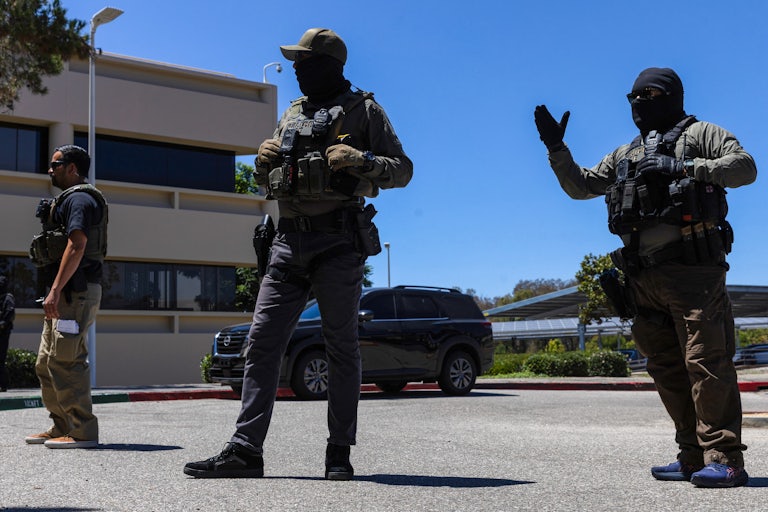
Lead
Immigration and Customs Enforcement (ICE) agents and officers may soon be equipped with a controversial new tool — gloves that deliver electrical shocks — which the manufacturer says are intended to de-escalate encounters with individuals.
The Contract & the Plan
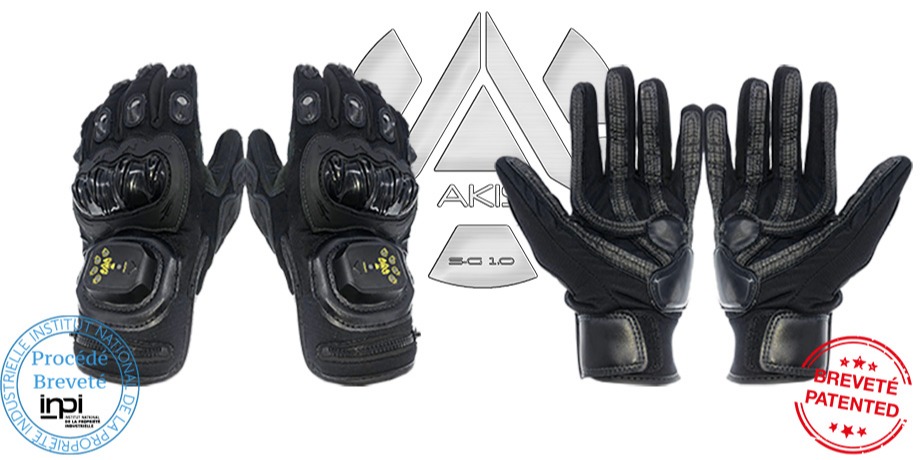
- ICE is planning to spend between an estimated $10 million and $20 million to purchase the devices, known as the CTG 5 G.L.O.V.E. — short for “Generated Low Output Voltage Emitter” — according to a notice published Monday by the Department of Homeland Security.
- The devices would be delivered by March 31, 2027, per a contract previewed on DHS’ portal for forecasting contract opportunities.
- It remains unclear how many gloves DHS intends to purchase, the cost per glove, and when officers would begin using them.
- The DHS notice said the solicitation for a no-bid contract could be published as early as Friday.
- The DHS portal described the purchase as “a Conductive Distraction and De-escalation Device which will be issued to Homeland Security Investigations (H.S.I.) and Enforcement Removal Operations (ERO) officers and agents.”
- The notice comes as agencies enforcing immigration arrests face scrutiny over what critics call aggressive and dangerous tactics, and amid pressure from the Trump administration to make around 2,000 arrests a day.
- The underlying purchase notice was posted on August 10, 2026, according to earlier reporting .
- DHS sources also confirmed to NewsNation that $20 million has been earmarked for the shock-emitting gloves .
Responses from DHS & the Manufacturer
- The Department of Homeland Security and the device manufacturer, Compliant Technologies LLC of Lexington, Kentucky, did not immediately respond to CNN’s requests for comment .
- DHS told the Associated Press — which was first to report the story — that it was working on a response but had no immediate statement.
- Jeff Niklaus, the founder and CEO of Compliant Technologies, told AP by email that the company was unable to comment.
 How the G.L.O.V.E. Works
- Compliant Technologies markets the G.L.O.V.E. as a “wearable de-escalation device” that can be shifted into electrical mode.
- According to the user manual for the CTG4 and CTG5 models on the company’s website, the gloves can deliver a maximum voltage of up to 380V that “inhibits/distracts the subject from performing coordinated muscle movement.”
- The manual says no more than two gloves should be applied to a subject at one time, and they should not be used for more than 15 seconds in many instances.
- If an incident occurs in which “the officer(s) or the public has become endangered,” it suggests the gloves be used as necessary until “control and compliance” is gained, or that a higher level of force be used.
- The gloves must come into direct contact with the skin and are not effective through clothing or hair, the manual states.
- The company says the gloves are intended to “supplement existing tools for law enforcement, corrections, security, EMS and the military,” calling them an “‘invisible partner'” to enhance a user’s effectiveness within their agency’s established tactics, techniques, and procedures.
Safeguards & Warnings
- The company warns the gloves should not be used as “punishment” or on high-risk individuals, including those who are pregnant, elderly people, small children, and severely disabled individuals.
- It also warns against deploying them for mere “verbal defiance or belligerence.”
- Anyone who uses the gloves must be certified and recertified every other year to continue using them, according to the user manual.
‘Compliance Within Three Seconds’ — Prior Use & Support
- Similar devices have been used before in some law enforcement and corrections operations.
- In 2024, CNN affiliate KOKH reported the Oklahoma County Jail planned to begin using electric gloves produced by the same company, which could zap inmates at a rate of at least 210 volts.
- Compliant Technologies’ Oklahoma distributor, Justin Morris, said at the time that the way the technology is used isn’t capable of causing injury.
- “We’re only grabbing enough motor units across the skin to stimulate the peripheral nervous system. Just the sensory portion of that. So, we don’t cause any injury with our device,” Morris said, adding, “we usually get compliance within three seconds.”
- John Peters, president of the Institute for the Prevention of In-Custody Deaths, who is studying how the device has been used, told AP the feeling is “immediate and sharp, and it will distract you. I call it like a bee sting.”
- “If the officer is getting any type of resistance from the person, this is certainly an effective tool,” Peters said.
- He added that “for smaller officers or weaker officers or older officers, I think it has a great advantage” because it can produce faster takedowns and shorten confrontations.
- The Oklahoma County Jail’s then-CEO told KOKH in 2024 that the device is ideal for her majority-female staff.
Past Incidents & Criminal Charges
- The devices have also been used in prior incidents resulting in criminal charges, according to South Carolina’s The State newspaper, citing the South Carolina Law Enforcement Division (SLED).
- In 2022, two corrections officers at the Laurens County Detention Center were charged with beating and shocking an inmate with “a wearable G.L.O.V.E. stun device” in two separate incidents, SLED said.
Critics Sound the Alarm
- Kica Matos, president of the National Immigration Law Center, slammed the proposal to equip ICE officers and agents with the gloves.
- “This is a rogue agency with an $80 billion slush fund that allows them to concoct and fund new ways to visit cruelty upon our communities,” she told CNN, describing the possible arming of agents with the gloves as “disgusting and barbaric.”
- Civil rights advocates, including from the American Civil Liberties Union, also expressed alarm at the plan.
- Jenn Rolnick Borchetta, deputy project director on policing at the ACLU, told AP the public should have no confidence that ICE officers will use the devices appropriately, and she questioned why the devices would be necessary for civil immigration enforcement.
- “ICE spent the last year showing this country they are too quick to use force. Now they will be able to deploy electric shocks with the slight push of a button that maybe nobody else can see them do,” she said.
- “Introducing gloves that can so easily be used to deliver terrible pain in encounters is a recipe for harm to the public,” she added.
- Separately, the ACLU said last week that it had filed 54 legal claims related to alleged abuse by immigration agents .
Extended Context
- The glove procurement follows other recent developments at the agency, including moves to ensure ICE agents use bodycams in the wake of shootings .
- The broader program of immigration enforcement under President Trump’s second term has included 274 executive orders, 84 memoranda, and 167 proclamations as of August 10, 2026, many touching on border and enforcement policy .
Bottom line: DHS’s notice reveals a $10–$20 million, no-bid-track plan to equip HSI and ERO officers with thousands of CTG 5 G.L.O.V.E. shock gloves — up to 380V, skin-contact only, certified-use only — with delivery by March 31, 2027. Supporters call it a fast, low-injury compliance tool (“compliance within three seconds”), while the ACLU, the National Immigration Law Center, and other civil-rights groups condemn it as “disgusting and barbaric,” citing ICE’s recent use-of-force record and past criminal charges involving the device in a South Carolina jail.