Former President Bill Clinton Was Hospitalized After Developing a Fever — Here’s What Happened
The 78-Year-Old Former President Was Taken to MedStar Georgetown University Hospital for Testing and Observation
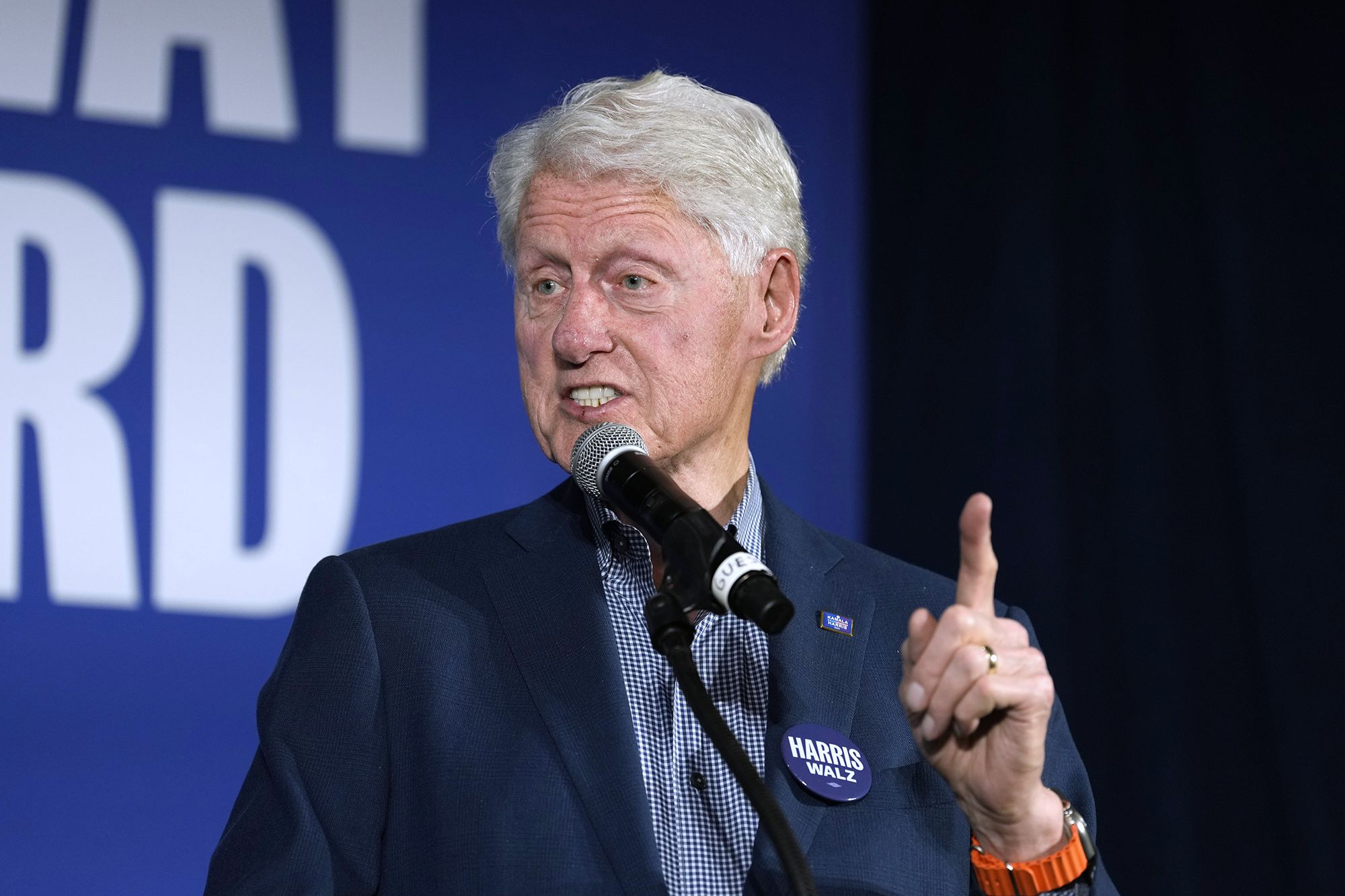
Former President Bill Clinton was admitted to a hospital in Washington, D.C., on Monday, December 23, 2024, after developing a fever.
Clinton, who was 78 at the time, was taken from his Washington-area home to MedStar Georgetown University Hospital for testing and observation.
His aides said the hospitalization was precautionary and that Clinton was awake, alert and in good spirits.
Angel Ureña, Clinton’s deputy chief of staff, said the former president was doing well while receiving medical attention.
“The president is fine.”
Clinton’s team also indicated that he hoped to return home in time to spend Christmas with his family.
Clinton Was Expected to Remain in the Hospital Overnight
The initial information from Clinton’s team emphasized that doctors were evaluating the fever rather than announcing a major medical emergency.
He was expected to remain at MedStar Georgetown University Hospital at least overnight while doctors conducted tests and monitored his condition.
His representatives said he remained in good spirits and appreciated the medical care he was receiving.
The hospitalization attracted immediate attention because Clinton had experienced several significant medical issues since leaving the White House.
The Fever Developed While Clinton Was in Washington
Clinton was at his Washington-area residence when the fever developed.
His aides decided to take him to the hospital out of an abundance of caution.
At that stage, no additional symptoms were publicly detailed beyond the fever.
His team emphasized that he was conscious and alert while undergoing observation.
Although Clinton hoped to leave before Christmas, his discharge ultimately depended on his doctors and the results of his medical evaluation.
His Medical History Made the Hospital Visit Noteworthy
Clinton has dealt with several health problems since leaving office in January 2001.
In 2004, he underwent quadruple bypass heart surgery after experiencing symptoms associated with significant heart disease.
The following year, he underwent another procedure related to a partially collapsed lung.
In 2010, Clinton received two coronary stents.
Another significant hospitalization occurred in 2021, when Clinton was treated in California for a urological infection that had spread into his bloodstream.
He remained hospitalized for several days during that episode.
Doctors Were Monitoring the Former President Carefully
Because fever can have many causes, the initial hospitalization focused on testing and observation.
Clinton’s representatives did not immediately announce exactly what had caused the fever.
Instead, the message from his team was that he was receiving appropriate medical care and remained in stable spirits.
The decision to keep him overnight gave doctors additional time to determine what was causing his symptoms and monitor whether his condition changed.
Clinton Had Maintained an Active Public Schedule
The hospital visit came after a busy period for the former president.
During 2024, Clinton had remained active in public life.
He appeared at the Democratic National Convention and participated in campaign events during the presidential election.
He had also been promoting his memoir, Citizen, which was released shortly before the hospitalization.
His continued travel and public appearances meant the unexpected hospital admission quickly became national news.
His Team Initially Hoped He Would Be Home for Christmas
Despite the concern surrounding any hospitalization involving a former president, Clinton’s aides repeatedly emphasized that he was in good spirits.
The expectation was that the stay would be relatively brief if doctors did not discover anything requiring additional treatment.
His family hoped he would be discharged in time for Christmas.
That expectation ultimately proved correct.
The Cause of the Fever Was Later Identified
By the following day, Clinton’s team provided additional information about his condition.
The former president had been treated for the flu.
After spending the night at MedStar Georgetown University Hospital, Clinton was discharged on Tuesday, December 24.
That update clarified what had initially been described only as a fever requiring testing and observation.
There was no prolonged hospitalization.
Clinton Returned Home on Christmas Eve
After his discharge, Clinton’s office said he and his family were grateful to the medical professionals who had cared for him.
His team also expressed appreciation for the messages and well wishes he received while hospitalized.
The former president was able to return home in time for the Christmas holiday, as his aides had hoped when he was first admitted.
The episode therefore lasted roughly one night rather than developing into an extended hospital stay.
The Hospitalization Began With a Fever and Ended With a Flu Diagnosis
The timeline is important because the first reports did not identify the underlying cause of Clinton’s symptoms.
On December 23, he developed a fever at his Washington-area home and was taken to MedStar Georgetown University Hospital.
He remained there for testing, observation and treatment.
On December 24, his representatives announced that he had been treated for the flu and had been discharged.
He then returned home to spend the holiday with his family.
What Initially Sounded Concerning Had a Quick Resolution
The news of a 78-year-old former president being admitted to a hospital naturally generated attention, particularly because of Clinton’s previous medical history.
But the information released by his representatives throughout the episode consistently described him as awake, alert and in good spirits.
The subsequent announcement that he had been treated for the flu provided the explanation that was missing from the earliest reports.
By Christmas Eve, Clinton was no longer hospitalized and was recovering at home.
What began with an unexpected fever and an overnight stay therefore concluded with the former president returning home after treatment for the flu.
While Bill Clinton is not an academic philosopher or economist who published formal “theories” in the traditional sense, he is globally famous for popularizing a specific political and governing philosophy known as “The Third Way” (along with the political strategy of “Triangulation”).
If there is one framework associated with Bill Clinton that political scientists, historians, and leaders study today, it is *The Third Way*. Here is a breakdown of what it is, why it matters, and what we can learn from it.
1. What is “The Third Way”?
Emerging in the 1990s, “The Third Way” was a centrist political philosophy that sought to reconcile center-left social values with center-right economic policies. It was a direct response to the perceived failures of traditional 20th-century politics:
The “First Way” was traditional Old Left liberalism, which relied on heavy government intervention, high taxes, and expansive welfare states (which critics argued led to economic stagnation and bureaucratic bloat).
The “Second Way” was traditional Right-wing conservatism, which championed free-market fundamentalism, deregulation, and deep cuts to social safety nets (which critics argued led to inequality and social neglect).
The “Third Way” argued that neither extreme worked in a modern, globalized information economy. Instead, it proposed that government should not be the *sole provider* of solutions, but rather a *catalyst and partner* with the private sector and civil society.
(Note: The intellectual foundation of this was heavily influenced by British sociologist Anthony Giddens, while the ruthless political application of it in the U.S. was pioneered by strategist Dick Morris and the Democratic Leadership Council).
2. The Strategy of “Triangulation”
Closely tied to the Third Way is Clinton’s famous political strategy of Triangulation.
When Clinton faced a hostile, Republican-controlled Congress after the 1994 midterms, his advisor Dick Morris advised him to “triangulate.” This meant:
* Identifying popular ideas from the opposing party (e.g., welfare reform, balancing the budget, being tough on crime).
* Adopting those ideas, but modifying them to include core Democratic values (e.g., adding job training to welfare reform, protecting Medicare while balancing the budget).
* By doing this, Clinton positioned himself *above* and *between* the two partisan extremes, making it difficult for Republicans to attack him without looking unreasonable, while simultaneously frustrating the liberal wing of his own party.
3. Key Principles of Clinton’s Framework (What We Should Learn)
If you study Clinton’s Third Way, there are three highly practical lessons in governance and leadership:
A. Pragmatism Over Ideology (“What Works”)
Clinton famously declared in his 1996 State of the Union address: “The era of big government is over.” This was a shocking statement for a Democratic president. However, he followed it up by saying, “But we cannot go back to the time when our citizens were left to fend for themselves.”
The Lesson: Effective leadership requires adapting to reality rather than clinging to rigid ideological dogma. If a traditional liberal policy isn’t working, a pragmatic leader will adjust it rather than defend it out of partisan loyalty.
B. Fiscal Responsibility as a Tool for Social Progress
Before Clinton, many Democrats believed that social programs could be endlessly expanded through deficit spending. Clinton’s Third Way argued that you cannot help the poor or fund education if the economy is unstable and the national debt is crushing future growth. By raising taxes on the wealthy, cutting discretionary spending, and balancing the budget, he freed up resources to invest in things like the Children’s Health Insurance Program (CHIP) and the Earned Income Tax Credit (EITC).
The Lesson: Economic credibility is a prerequisite for achieving progressive social goals.
C. Investing in the “Architecture” of the Future
Clinton’s Third Way recognized that the world was shifting from an industrial economy to an information/technology economy. Instead of trying to protect obsolete industries with tariffs, his administration invested in the “architecture” of the future: expanding internet access to schools and libraries, promoting STEM education, and supporting free trade agreements (like NAFTA) while pairing them with job-retraining programs for displaced workers.
The Lesson: Governments must proactively prepare their workforce for technological disruption rather than reacting to it after the damage is done.
4. Global Impact of the Theory
Clinton’s Third Way did not stay in America. It became the blueprint for center-left politics worldwide in the late 1990s and early 2000s.
* In the UK, Prime Minister Tony Blair explicitly adopted the Third Way to create “New Labour,” ending 18 years of Conservative rule.
* In Germany, Chancellor Gerhard Schröder implemented similar “Agenda 2010” reforms.
* Leaders in Canada, Australia, and Latin America adopted similar centrist, market-friendly, yet socially conscious frameworks.
5. Critiques and Limitations (Why It’s Controversial Today)
To truly learn from the Third Way, one must also understand its flaws, which are heavily debated in modern politics:
Alienation of the Working Class: By embracing free trade (NAFTA) and financial deregulation (repealing the Glass-Steagall Act), the Third Way is widely criticized today for accelerating the outsourcing of manufacturing jobs and contributing to the 2008 financial crisis.
The Rise of Populism: Critics argue that by moving so far to the center, the Third Way abandoned the traditional working-class base of the Democratic Party, creating a political vacuum that was eventually filled by populist movements on both the far-left and far-right.
Moral Compromise: The strategy of “Triangulation” is often criticized by political purists as being overly cynical, prioritizing poll-tested survival over bold, principled moral leadership.
Summary: Why Learn This Today?
Whether you agree with it or not, The Third Way and Triangulation remain essential concepts for understanding modern politics. It teaches the art of political compromise, the importance of adapting institutions to technological change, and the delicate balance between market efficiency and social equity. In an era of extreme political polarization, studying how Clinton navigated divided government to achieve legislative breakthroughs offers a masterclass in pragmatic, results-oriented leadership.
Bill Clinton is one of the most famous and recognizable political figures in modern history. His fame is not the result of just one thing, but rather a unique and unprecedented combination of historic political achievements, unmatched personal charisma, massive global scandals, and a lasting post-presidency.
Here is a breakdown of exactly why he is so famous:
1. Unmatched Charisma and Pop-Culture Crossover
Before Bill Clinton, politicians were generally seen as stiff, formal, and distant. Clinton revolutionized political communication. He possessed a rare, almost magnetic ability to make individuals feel like they were the only person in the room. He was the first “Baby Boomer” president, and he actively engaged with pop culture in ways no president had before.
* He famously played the saxophone on *The Arsenio Hall Show* during the 1992 campaign, wearing dark sunglasses, which electrified young voters.
* He appeared on MTV to discuss issues, wore sneakers in the Oval Office, and spoke in a relatable, empathetic tone. This made him a celebrity as much as a politician, earning him nicknames like “The Comeback Kid” and, from his detractors, “Slick Willie.”
2. Historic Economic and Political Achievements
He is famous for presiding over one of the most successful periods in American economic history. In the 1990s, the U.S. experienced the longest peacetime economic expansion on record, the creation of over 22 million jobs, and the transition from massive federal deficits to budget surpluses. Furthermore, his political philosophy “The Third Way” is studied worldwide because it successfully reinvented the center-left, moving the Democratic Party toward the political center and influencing leaders globally, such as UK Prime Minister Tony Blair.
3. The Monica Lewinsky Scandal and Impeachment
It is impossible to discuss Clinton’s fame without acknowledging the scandal that dominated the late 1990s. The revelation of his affair with White House intern Monica Lewinsky, and his subsequent denial under oath, led to his impeachment by the House of Representatives in 1998.
* He became only the second U.S. president in history to be impeached (after Andrew Johnson in 1868).
* Because this happened during the dawn of the 24-hour cable news cycle and the early internet, the scandal was broadcast globally in graphic, unprecedented detail. It made his name a household word in virtually every country on Earth.
4. The “Comeback Kid” Narrative
Political scientists and historians are fascinated by Clinton’s uncanny ability to survive political disasters that would have ended any other career.
* He lost his first bid for Governor of Arkansas in 1980 but humbled himself, apologized to voters, and won it back in 1982.
* His 1992 presidential campaign was nearly destroyed by scandals involving a draft deferment and allegations of extramarital affairs, yet he pivoted and won the presidency.
* He survived a grueling impeachment trial in 1999 and left office in 2001 with a 65% public approval rating, one of the highest for any departing president. This resilience is legendary in political strategy.
5. A Highly Active and Controversial Post-Presidency
Unlike many former presidents who fade into quiet retirement, Clinton has remained in the global spotlight for over two decades.
* He built the Clinton Foundation into a massive global organization tackling issues like HIV/AIDS in Africa and climate change.
* He served as a crucial political surrogate and strategist for his wife, Hillary Clinton, during her historic runs for the U.S. Senate, Secretary of State, and the Presidency.
* His post-presidency has also been marked by continued controversy, such as the acceptance of donations from foreign governments while his wife was Secretary of State, and his association with disgraced financier Jeffrey Epstein, which has kept him in the news cycle long after leaving office.
Summary
Bill Clinton is famous because he is a **living paradox**. He is remembered simultaneously as one of the most politically gifted, policy-effective, and empathetic leaders in American history, and as a deeply flawed figure whose personal indiscretions and ethical blind spots triggered a constitutional crisis. That combination of towering competence and dramatic controversy ensures his place as one of the most written-about and recognized figures of the modern era.
The Life, Presidency, and Behind-the-Scenes History of Bill Clinton
William Jefferson Clinton, the 42nd President of the United States, remains one of the most complex, charismatic, and heavily scrutinized figures in modern American political history. His life story is a classic tale of upward mobility, intellectual brilliance, and extraordinary political instinct, permanently intertwined with a series of personal and administrative scandals that defined the hyper-partisan political landscape of the 1990s.
Early Life and Formative Years
Bill Clinton was born William Jefferson Blythe III on August 19, 1946, in the small, rural town of Hope, Arkansas. His arrival into the world was preceded by tragedy; his biological father, William Jefferson Blythe Jr., a traveling salesman, died in a tragic car accident three months before Bill was born. His mother, Virginia Cassidy Blythe, eventually moved to New Orleans to study nursing, leaving young Bill in Hope to be raised by his maternal grandparents, Eldridge and Edith Cassidy. They ran a small grocery store and, notably for the segregated South, sold goods to Black customers on credit, instilling in young Bill an early, albeit complicated, awareness of racial dynamics and community service.
When Bill was four, his mother returned and married Roger Clinton Sr., an automobile salesman. The family moved to Hot Springs, Arkansas, a spa town known for its gambling and nightlife. Clinton’s home life was frequently volatile; his stepfather struggled with severe alcoholism and was prone to abusive behavior toward both Virginia and Bill’s half-brother, Roger Jr. Bill frequently acted as the family peacemaker, a role that psychologists and biographers later noted contributed heavily to his lifelong desire to please others, mediate conflicts, and avoid direct confrontation. Despite the household turbulence, Clinton was a stellar student and a talented musician, playing the tenor saxophone so well that he performed on national television on *The Ed Sullivan Show*.
A profound turning point in Clinton’s life occurred in 1963. As a high school junior, he was selected as a delegate for the American Legion Boys Nation program in Washington, D.C. During the trip, he visited the White House and met President John F. Kennedy in the Rose Garden. A famous photograph captures the 17-year-old Clinton shaking the President’s hand, gazing at him with profound admiration. Later that same summer, he watched Martin Luther King Jr. deliver his historic “I Have a Dream” speech on television, and subsequently heard King’s “I’ve Been to the Mountaintop” speech in person. These experiences crystallized his desire to dedicate his life to public service.
Clinton attended Georgetown University in Washington, D.C., graduating in 1968 with a degree in International Affairs. He was highly active in student politics, serving as class president and working as an intern for Senator J. William Fulbright, a prominent Arkansas Democrat and vocal critic of the Vietnam War. Following Georgetown, Clinton won the prestigious Rhodes Scholarship, becoming the first Rhodes Scholar from Arkansas. He studied at University College, Oxford, from 1968 to 1970. His time at Oxford later became a minor political issue during his presidential runs due to the controversy surrounding his student deferments from the Vietnam War draft, though he ultimately received a high draft lottery number that ensured he would not be called to serve.
He returned to the United States to attend Yale Law School, where he met a brilliant fellow law student named Hillary Rodham. The two bonded over their shared intellectual rigor and political ambitions, forming a partnership that would become one of the most powerful and polarizing political alliances in American history. Clinton graduated from Yale in 1973 and, rather than taking lucrative corporate jobs, returned to Arkansas to teach law at the University of Arkansas and prepare for a life in politics.
Political Rise in Arkansas
Clinton’s initial foray into electoral politics was a 1974 campaign for the U.S. House of Representatives against the entrenched Republican incumbent, John Paul Hammerschmidt. Although Clinton lost the race, his energetic, youth-oriented campaign significantly narrowed a previously insurmountable margin, proving his political viability. In 1976, he ran for Arkansas Attorney General and won easily. As Attorney General, he focused on consumer protection and environmental regulations, quickly building a reputation as a rising star in the state’s Democratic Party.
In 1978, at the age of 32, Clinton was elected Governor of Arkansas, becoming the youngest governor in the country. However, his first term was fraught with political missteps. Dubbed the “boy governor,” he pushed through ambitious but unpopular measures, including a controversial motor vehicle tax and a sharp increase in utility rates. His aloof demeanor and lack of retail-politics charm alienated rural voters, and in the 1980 Republican landslide year, he became one of the few incumbent governors in the country to lose his reelection bid.
This devastating defeat forced a profound strategic and personal reckoning. Clinton spent the next two years apologizing, listening to voters, and reinventing himself. Crucially, Hillary Rodham agreed to adopt his surname, becoming Hillary Clinton, to appeal to the conservative sensibilities of Arkansas voters. In 1982, he ran for governor again, admitting his past arrogance and asking for a second chance. The voters forgave him, and he won the election. He would go on to win reelection in 1984, 1986, and 1990, serving a total of nearly 12 years as governor.
During his later terms, Clinton transformed his political brand. He became known as the “Education Governor,” championing a sweeping education reform package led by his wife, who chaired the Arkansas Education Standards Committee. The reforms included mandatory kindergarten, increased graduation requirements, and a highly controversial teacher testing program, which drew fierce resistance from the teachers’ unions but ultimately won over the public.
On the national stage, Clinton recognized that the Democratic Party was losing its working-class base. He became a leading figure in the Democratic Leadership Council (DLC), championing a “New Democrat” philosophy. This centrist approach advocated for fiscal responsibility, free trade, welfare reform, and a tough-on-crime stance, aiming to move the party away from the liberal orthodoxy of the 1970s and appeal to moderate, suburban, and Southern voters. This political triangulation laid the direct groundwork for his eventual presidential run.
The Presidency (1993–2001)
The 1992 Campaign and the “Comeback Kid”
Clinton entered the 1992 Democratic presidential primary as a relatively unknown Southern governor. His campaign nearly derailed before it began due to allegations of an extramarital affair with a lounge singer named Gennifer Flowers, as well as questions about his Vietnam draft status. In a now-legendary political maneuver, Clinton and Hillary appeared on the television show *60 Minutes* immediately following the Super Bowl. Clinton famously declared, “I’m not a perfect man… but you didn’t elect me to be perfect, you elected me to be President,” effectively neutralizing the character attacks and earning him the moniker “The Comeback Kid.”
Running against incumbent Republican President George H.W. Bush and independent populist Ross Perot, Clinton ran a highly disciplined campaign focused relentlessly on domestic issues, encapsulated by the famous slogan, “It’s the economy, stupid.” His youthful energy, empathetic communication style, and ability to connect with everyday voters via new platforms like MTV contrasted sharply with Bush’s perceived detachment. Clinton won the election, ending 12 years of Republican control of the White House.
**Domestic Policy and the “New Democrat” Agenda**
Clinton’s first term was ambitious but politically perilous. He attempted to overhaul the American healthcare system, tasking First Lady Hillary Clinton with leading a secretive, complex task force. The resulting plan was heavily criticized as bureaucratic and overreaching, ultimately failing in Congress and sparking a massive conservative backlash that contributed to the 1994 “Republican Revolution,” where the GOP took control of both the House and Senate for the first time in 40 years.
Following this defeat, Clinton famously declared that “the era of big government is over.” He pivoted toward his centrist DLC roots, engaging in a strategy of “triangulation” where he adopted popular Republican ideas (like welfare reform and balancing the budget) while protecting core Democratic priorities (like Medicare and education). In 1996, he signed the Personal Responsibility and Work Opportunity Reconciliation Act, a sweeping welfare reform bill that ended the federal guarantee of cash assistance, replacing it with block grants to states and imposing work requirements. While hailed by centrists, the bill deeply alienated many liberals and advocates for the poor.
Other major domestic achievements included the signing of the North American Free Trade Agreement (NAFTA), the passage of the Family and Medical Leave Act, the creation of the State Children’s Health Insurance Program (SCHIP), and the controversial 1994 Crime Bill, which funded 100,000 new police officers but is now widely criticized for contributing to mass incarceration. Economically, his presidency coincided with the dot-com boom. Working with a Republican Congress, Clinton achieved the first balanced federal budget in decades and generated massive budget surpluses, leaving the national debt significantly reduced.
Foreign Policy
Clinton’s foreign policy was characterized by the concept of “democratic enlargement,” attempting to expand free markets and human rights in the post-Cold War era. His administration played a crucial role in brokering the Dayton Accords, which ended the brutal war in Bosnia. He later authorized NATO bombing campaigns in Kosovo to halt the ethnic cleansing of Albanians by Serbian forces. In the Middle East, he heavily invested in the Oslo Peace Process, hosting historic handshakes between Israeli and Palestinian leaders on the White House lawn, though a final, lasting peace agreement ultimately eluded him. He also ordered missile strikes against Iraq in response to Saddam Hussein’s obstruction of UN weapons inspectors.
Behind-the-Scenes History and Controversies
The Clinton presidency occurred during a paradigm shift in American media and politics. The rise of 24-hour cable news networks (like the nascent CNN and Fox News), the dawn of the internet, and the emergence of aggressive conservative investigative journalism created an environment of unprecedented scrutiny. The Clinton White House was besieged by a series of scandals that operated just behind the curtains of his policy successes.
1. The Whitewater Controversy
The longest-running shadow over Clinton’s political career began long before he reached the White House. In the late 1970s, Bill and Hillary Clinton, along with their friends Jim and Susan McDougal, invested in a failed real estate development called Whitewater in the Ozark Mountains of Arkansas. The Clintons lost money on the venture, but the scandal exploded when Jim McDougal’s savings and loan, Madison Guaranty, collapsed during the national savings and loan crisis, costing taxpayers tens of millions of dollars.
During the 1992 campaign, questions arose about whether Clinton had used his political influence as governor to secure favorable regulatory treatment for Madison Guaranty, and whether illegal campaign funds had been funneled through the bank. This spawned multiple independent investigations. The tragedy of the Whitewater saga was compounded in 1993 by the sudden suicide of Deputy White House Counsel Vince Foster. Foster had been deeply stressed by the Whitewater probes, and his death spawned wild conspiracy theories on the right-wing fringes of the internet and talk radio, alleging a cover-up by the Clintons.
The investigations also uncovered the mysterious disappearance and subsequent reappearance of Hillary Clinton’s billing records from her time at the Rose Law Firm, which were eventually found in the White House residence book room with her fingerprints on them. Furthermore, Hillary faced intense scrutiny over highly lucrative investments in cattle futures in the late 1970s, which critics claimed were impossibly profitable for an amateur investor. Ultimately, while several of the Clintons’ Arkansas associates (including Jim Guy Tucker and the McDougals) were convicted of financial crimes, Independent Counsel Robert Ray concluded his investigation in 2000, stating there was insufficient evidence to prove that either Bill or Hillary Clinton knowingly participated in any criminal conduct. Neither was ever charged.
2. The Monica Lewinsky Scandal and Impeachment
The most defining and damaging behind-the-scenes scandal of Clinton’s presidency began not with a policy dispute, but with a personal indiscretion. In 1995, a 22-year-old White House intern named Monica Lewinsky began an 18-month sexual relationship with the 49-year-old President. The affair occurred in the private corridors of the West Wing and was kept strictly confidential by a small circle of trusted aides.
However, the secret unraveled due to a separate, seemingly unrelated legal battle. Paula Jones, a former Arkansas state employee, had filed a civil sexual harassment lawsuit against Clinton. During the discovery phase of the Jones lawsuit, Clinton was deposed under oath and specifically asked if he had ever had sexual relations with a White House intern. He denied it.
Meanwhile, Lewinsky had confided in an older coworker, Linda Tripp, who secretly recorded their phone conversations and subsequently handed the tapes to literary agents, who passed them to the press and to Kenneth Starr. Starr was the Independent Counsel who had originally been appointed to investigate Whitewater, but his mandate had been quietly expanded to include the Paula Jones case. Armed with Tripp’s tapes and a blue dress belonging to Lewinsky that contained the President’s DNA, Starr cornered Clinton.
Faced with undeniable physical evidence, Clinton was forced to admit to the American public that he had an “inappropriate relationship” with Lewinsky, though he maintained that his sworn testimony in the Jones case was legally accurate under the specific, narrow definition of “sexual relations” provided to him by his lawyers. Kenneth Starr, however, believed Clinton had committed perjury and actively attempted to obstruct justice by encouraging aides to lie to investigators. In September 1998, Starr submitted a massive, graphically detailed report to the House of Representatives, outlining 11 potential grounds for impeachment.
Driven by intense partisan fury, the Republican-led House of Representatives voted in December 1998 to impeach Clinton on two articles: perjury before a grand jury and obstruction of justice. Clinton became only the second President in U.S. history to be impeached. The subsequent Senate trial in early 1999 was a highly publicized spectacle. Ultimately, the Senate failed to reach the two-thirds majority required to convict and remove him from office. Clinton was acquitted, but his presidency was forever stained by the humiliation of the proceedings, and he was subsequently disbarred from practicing law in Arkansas and before the Supreme Court for five years.
3. Travelgate and Filegate
Beyond Whitewater and Lewinsky, the Clinton White House was plagued by administrative controversies that fueled the narrative of a corrupt inner circle.
Travelgate (1993): Shortly after taking office, the Clinton administration abruptly fired seven employees of the non-partisan White House Travel Office, replacing them with individuals from Arkansas who were friends of the Clintons. The administration claimed the firings were due to financial mismanagement in the office, but critics alleged it was a corrupt move to hand lucrative government travel contracts to political cronies. A lengthy FBI investigation eventually cleared the Clintons of criminal wrongdoing, though it severely criticized the White House for its chaotic and inappropriate management of the firings.
Filegate (1996): It was revealed that the White House had improperly requested and received hundreds of confidential FBI security clearance files on former Reagan and Bush administration officials. The files contained highly sensitive personal and financial information. The White House blamed a bureaucratic error and a flawed computer database, and while no evidence ever surfaced proving the President or First Lady ordered the acquisition of the files for political blackmail, it fed into the prevailing narrative of White House ethical laxity.
Donorgate / Chinagate: During the 1996 reelection campaign, the Democratic National Committee and the Clinton campaign were accused of soliciting illegal foreign donations, particularly from individuals connected to the People’s Republic of China. Clinton was heavily criticized for hosting “coffees” at the White House and allowing major donors to sleep in the Lincoln Bedroom, blurring the lines between official duties and campaign fundraising. While several fundraisers were convicted of fraud, no direct criminal charges were ever brought against the President.
4. The Pardon Controversy
In the final hours of his presidency in January 2001, Clinton issued 140 pardons and commutations, a standard practice for outgoing presidents, but his list included highly controversial figures. The most infamous was Marc Rich, a fugitive billionaire financier and commodities trader who had fled to Switzerland to avoid prosecution for tax evasion and trading with Iran during the hostage crisis. Rich’s ex-wife, Denise Rich, had been a massive donor to the Clinton Foundation and the Democratic Party. The pardon sparked bipartisan outrage and subsequent congressional hearings, with critics arguing that the Clintons had essentially sold executive clemency for political and charitable donations.
Post-Presidency and Legacy
Leaving the White House with high public approval ratings regarding his job performance (despite low marks for his personal character), Clinton transitioned into an incredibly active and lucrative post-presidency. He and Hillary moved to Chappaqua, New York, setting the stage for her successful runs for the U.S. Senate.
Clinton established the William J. Clinton Presidential Center in Little Rock, Arkansas, and built the Clinton Foundation into a massive global philanthropic powerhouse. Unlike traditional presidential libraries, the Foundation focused on actionable global initiatives. He championed the Clinton Global Initiative (CGI), bringing together heads of state, corporate CEOs, and NGO leaders to make specific financial commitments to combat climate change, alleviate global poverty, and improve public health. He was particularly active in disaster relief, partnering with his former political rival, George W. Bush, to raise funds for the victims of the 2004 Indian Ocean tsunami and the 2010 Haiti earthquake.
He also became the ultimate political surrogate for his wife, campaigning tirelessly for her during her 2008 presidential primary run against Barack Obama, and later serving as a crucial surrogate and advisor during her 2016 campaign against Donald Trump. In his later years, Clinton faced significant health challenges, undergoing multiple heart bypass surgeries and adopting a strict plant-based diet to prolong his life.
Historical Assessment
Historians and political scientists view Bill Clinton as a paradox. On one hand, he is recognized as a transformative political talent who modernized the Democratic Party, presided over an era of unprecedented peace and economic prosperity, and possessed a unique, empathetic ability to connect with the American people. On the other hand, his legacy is inextricably linked to his personal failings and his administration’s ethical blind spots, which ushered in an era of scorched-earth partisan warfare, hyper-investigative media, and the normalization of impeachment as a political weapon.
Ultimately, Bill Clinton remains the quintessential figure of the 1990s: a leader of immense intellect and charm who built a booming modern economy, yet whose personal indiscretions and the relentless scandals of his inner circle left a permanent, complicated stain on his historic achievements.
Major Presidential Achievements (1993–2001)
1. Unprecedented Economic Prosperity and Fiscal Turnaround
- From Deficit to Surplus: Upon taking office in 1993, Clinton signed the Omnibus Budget Reconciliation Act, which raised taxes on the highest income earners and cut spending. Despite fierce Republican opposition (not a single Republican voted for it), the act is widely credited by economists with jumpstarting deficit reduction. By 1998, the federal budget recorded its first surplus in 29 years. By the time he left office in 2001, the government had posted four consecutive years of surpluses, totaling over $500 billion, and the national debt held by the public was on a trajectory to be eliminated.
- Job Creation and Wage Growth: The Clinton economy generated approximately 22 million new jobs, a record for any presidential administration at the time. Unemployment dropped from 7.3% in 1993 to 4.0% in 2000, the lowest level in three decades. Crucially, this growth was accompanied by rising real wages for low- and middle-income workers, driven in part by Clinton’s aggressive expansion of the Earned Income Tax Credit (EITC), which lifted an estimated 5 million Americans, including 3 million children, out of poverty.
- Technological Boom: His administration actively fostered the emerging digital economy. The Telecommunications Act of 1996, the first major overhaul of U.S. communications law in 62 years, deregulated the industry, spurred competition, and laid the legal groundwork for the explosive growth of the commercial internet.
2. Landmark Domestic Legislation and Social Reform
- Family and Medical Leave Act (1993): On his third day in office, Clinton signed this historic legislation, which guaranteed eligible employees up to 12 weeks of unpaid, job-protected leave per year for family and medical reasons, such as the birth of a child or a serious personal health condition. It was a monumental victory for working families and women’s rights advocates.
- Welfare Reform (1996): Fulfilling a 1992 campaign promise to “end welfare as we know it,” Clinton signed the Personal Responsibility and Work Opportunity Reconciliation Act. It replaced the open-ended federal welfare program (AFDC) with Temporary Assistance for Needy Families (TANF), imposing strict work requirements and a five-year lifetime limit on benefits. While highly controversial among progressive advocates who argued it increased deep poverty, the reform is widely credited with dramatically increasing workforce participation among single mothers and reducing the welfare rolls by more than half during his tenure.
- Expansion of Healthcare Access: Although his ambitious, universal healthcare plan led by Hillary Clinton failed in 1994, Clinton achieved a major incremental victory in 1997 with the creation of the State Children’s Health Insurance Program (SCHIP). SCHIP provided federal matching funds to states to offer health insurance to children in low-income families who did not qualify for Medicaid, ultimately extending coverage to over 10 million children. Additionally, he signed the Health Insurance Portability and Accountability Act (HIPAA) in 1996, which protected health insurance coverage for workers who lost or changed jobs and established national standards for the protection of personal health data.
- Crime and Gun Control: In response to rising violent crime rates in the early 1990s, Clinton signed the Violent Crime Control and Law Enforcement Act of 1994. This massive bill funded the hiring of 100,000 new community police officers, expanded the federal death penalty, and instituted a 10-year ban on the manufacture and sale of certain semi-automatic firearms (the Federal Assault Weapons Ban). He also signed the Brady Handgun Violence Prevention Act in 1993, which mandated federal background checks for firearm purchasers.
- National Service: In 1993, Clinton signed the National and Community Service Trust Act, establishing AmeriCorps. Modeled after the Peace Corps but focused on domestic issues, AmeriCorps mobilized tens of thousands of young Americans to serve their communities through education, public safety, health, and environmental projects in exchange for educational stipends.
3. Trade and Globalization
- NAFTA (1993): He successfully championed the ratification of the North American Free Trade Agreement, which eliminated most tariffs and trade barriers between the United States, Canada, and Mexico. While it faced fierce opposition from labor unions concerned about job outsourcing, it deeply integrated the North American economy and tripled trade volume among the three nations during his presidency.
- Normalization of Trade with China (2000): Clinton signed legislation granting China Permanent Normal Trade Relations (PNTR) status, ending the annual congressional review of China’s trade status. This pivotal move paved the way for China’s accession to the World Trade Organization (WTO) in 2001, fundamentally reshaping the global economic order.
4. Foreign Policy and Diplomatic Breakthroughs
- The Dayton Accords (1995): Clinton’s crowning diplomatic achievement was brokering the peace agreement that ended the devastating Bosnian War. After years of brutal ethnic conflict and genocide in the Balkans, Clinton brought the leaders of Bosnia, Croatia, and Serbia to a military base in Dayton, Ohio. The resulting agreement stopped the bloodshed and established a framework for a multi-ethnic, democratic Bosnia and Herzegovina, backed by a U.S.-led NATO peacekeeping force.
- Kosovo Intervention (1999): When Serbian forces under Slobodan Milošević launched a campaign of ethnic cleansing against Albanians in Kosovo, Clinton bypassed the gridlocked UN Security Council and led a 78-day NATO bombing campaign (Operation Allied Force). The intervention successfully forced Serbian troops to withdraw, saving countless lives and establishing Kosovo as a protected territory under UN administration.
- The Good Friday Agreement (1998): Clinton took a deep, personal interest in the decades-long sectarian conflict in Northern Ireland. He became the first sitting U.S. president to visit Northern Ireland, granting a visa to Sinn Féin leader Gerry Adams against the wishes of the British government. His administration’s relentless diplomatic pressure and the appointment of former Senator George Mitchell as a special envoy were instrumental in brokering the historic Good Friday Agreement, which largely ended “The Troubles” and established a power-sharing government in Belfast.
- Middle East Peace Efforts: Clinton invested immense political capital in the Israeli-Palestinian peace process. He facilitated the signing of the Oslo II Accord in 1995 and the historic Israel-Jordan peace treaty later that year. In the summer of 2000, he hosted the Camp David Summit, bringing Israeli Prime Minister Ehud Barak and Palestinian Authority Chairman Yasser Arafat together for intensive, around-the-clock negotiations. Although the summit ultimately failed to produce a final status agreement (leading to the Second Intifada), Clinton’s proposals laid the detailed groundwork for all subsequent peace negotiations.
- Restoring Democracy in Haiti (1994): When a military junta overthrew Haiti’s democratically elected president, Jean-Bertrand Aristide, Clinton orchestrated a U.S.-led intervention (Operation Uphold Democracy). Through a last-minute diplomatic deal brokered by former President Jimmy Carter, U.S. troops landed peacefully, the junta stepped down, and Aristide was restored to power, marking a rare, bloodless success for U.S. nation-building efforts.